The story
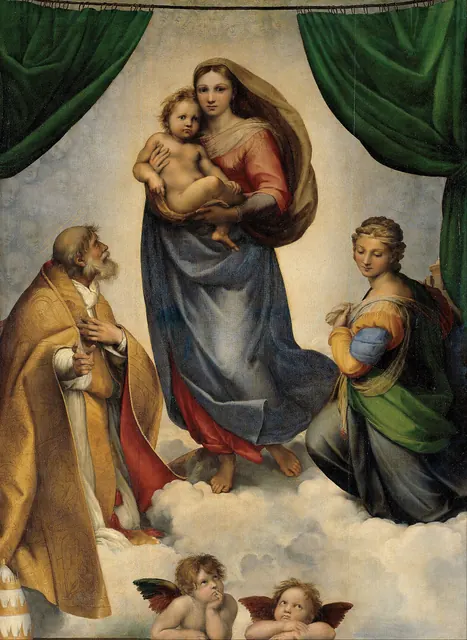
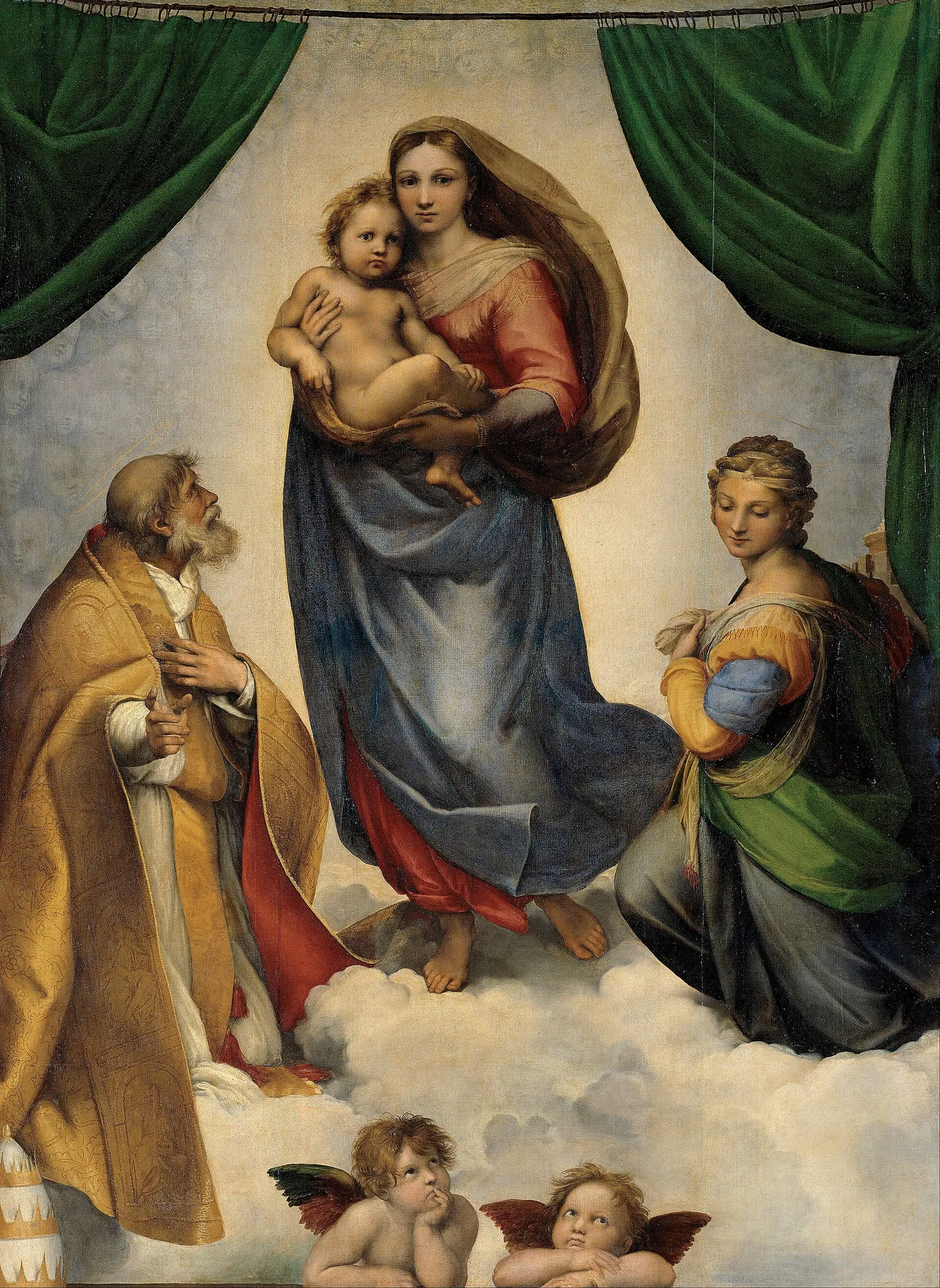
Picture a vaulted chapel, its ceiling bathed in soft light, where a luminous figure hovers above a gathering of cherubic angels. This is the scene Raphael rendered in the work we call the Sistine Madonna, an oil painting he completed in 1513–14 after receiving a commission from Pope Julius II. From its origins as a papal commission to its later home in Dresden, the painting’s journey invites us to follow the brushstrokes, the saints, and the remarkable path it has taken.
The canvas we see today was born in the early 1510s, when Raphael completed it between 1513 and 1514. The work was not a private commission but a papal one, ordered by Pope Julius II. By entrusting Raphael with this image of the Virgin and Child, the patron sought a visual expression of his spiritual aspirations, and the resulting painting bears the hallmarks of the High Renaissance—balanced composition, serene figures, and a luminous palette that still captivates the eye.
Once finished, the painting did not immediately hang in a papal palace. Instead, it was installed in the Benedictine convent church of San Sixto in Piacenza, a modest setting far from the grandeur of Rome. There, the work served as a devotional focal point for the community of monks, its towering presence framed by the simple architecture of the convent. The choice of this location reflects the original intent of the piece: to inspire contemplation and lift the hearts of the faithful toward the heavenly realm, even within the quiet walls of a monastic chapel.
Looking closely at the canvas, the eye is drawn first to the Virgin Mary, cradling the infant Christ in a gentle, triangular arrangement that anchors the composition. Flanking them, painted curtains part as if revealing a sacred stage, while a billowing sky of soft clouds stretches above. Dozens of cherubic putti float around the central figures, their playful gestures adding a sense of movement and lightness. The overall effect is one of a theatrical unveiling, where the divine tableau emerges from behind a veil, inviting the viewer to share in the awe of the celestial encounter.
On either side of the Virgin, Raphael placed two saints whose identities deepen the painting’s narrative. To the left stands Saint Sixtus II, a martyr whose name echoes the church that originally housed the work. On the right, Saint Barbara gazes toward the cluster of putti, her expression directing attention to the playful angels. This placement not only balances the visual weight of the composition but also links the sacred figures to the broader community of believers, suggesting a dialogue between the heavenly and the earthly, between martyrdom and the protective intercession of saints.
The multitude of cherubic putti that swirl around the Virgin and Child carries a hint of personal observation. Tradition records that Raphael drew inspiration for these youthful angels from the children he saw while working on the picture, capturing their spontaneous gestures and innocent delight. Though the claim remains an interpretation, it offers a plausible glimpse into the artist’s process: a master observing everyday life and translating those fleeting moments into a heavenly chorus. This anecdote reminds us that even a work of profound religious significance can be rooted in the simple, observable world around the painter.
The painting’s journey did not end in the convent. It later entered the collection of Augustus III, elector of Saxony, who acquired it as part of his cultural program. The work was transported from Italy to Dresden, where it joined a growing assembly of masterpieces that reflected the elector’s taste for Italian art. This relocation marked a shift from a devotional object to a prized item of a royal gallery, illustrating how artworks can move across borders and acquire new meanings within different political and aesthetic contexts.
From a papal commission to a monastic altar, and finally to a royal collection, the Sistine Madonna embodies a remarkable passage through history, each stage adding layers of meaning to Raphael’s masterful vision. Its balanced composition, luminous colors, and the tender interaction of its figures continue to lift the viewer’s gaze, a quality many have noted. As we step back from the canvas, we are reminded that great art endures not only through its visual brilliance but also through the stories it gathers along its long, winding journey.
Thank you for joining us on this journey through Raphael’s Sistine Madonna.