The story
Leonardo da Vinci, the quintessential Renaissance polymath, is the hand behind the mural known as The Last Supper. His name alone carries expectations of scientific observation, compositional daring, and psychological insight, and this work stands as a concrete embodiment of those traits. By attributing the painting to Leonardo, we anchor the piece within a tradition of artistic innovation that reshaped how narrative could be rendered on a wall, turning a simple dining hall into a stage for profound visual storytelling.
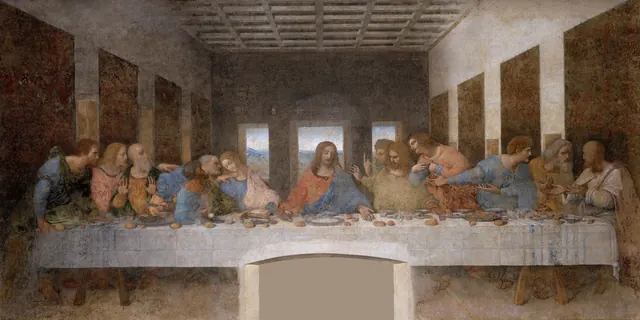
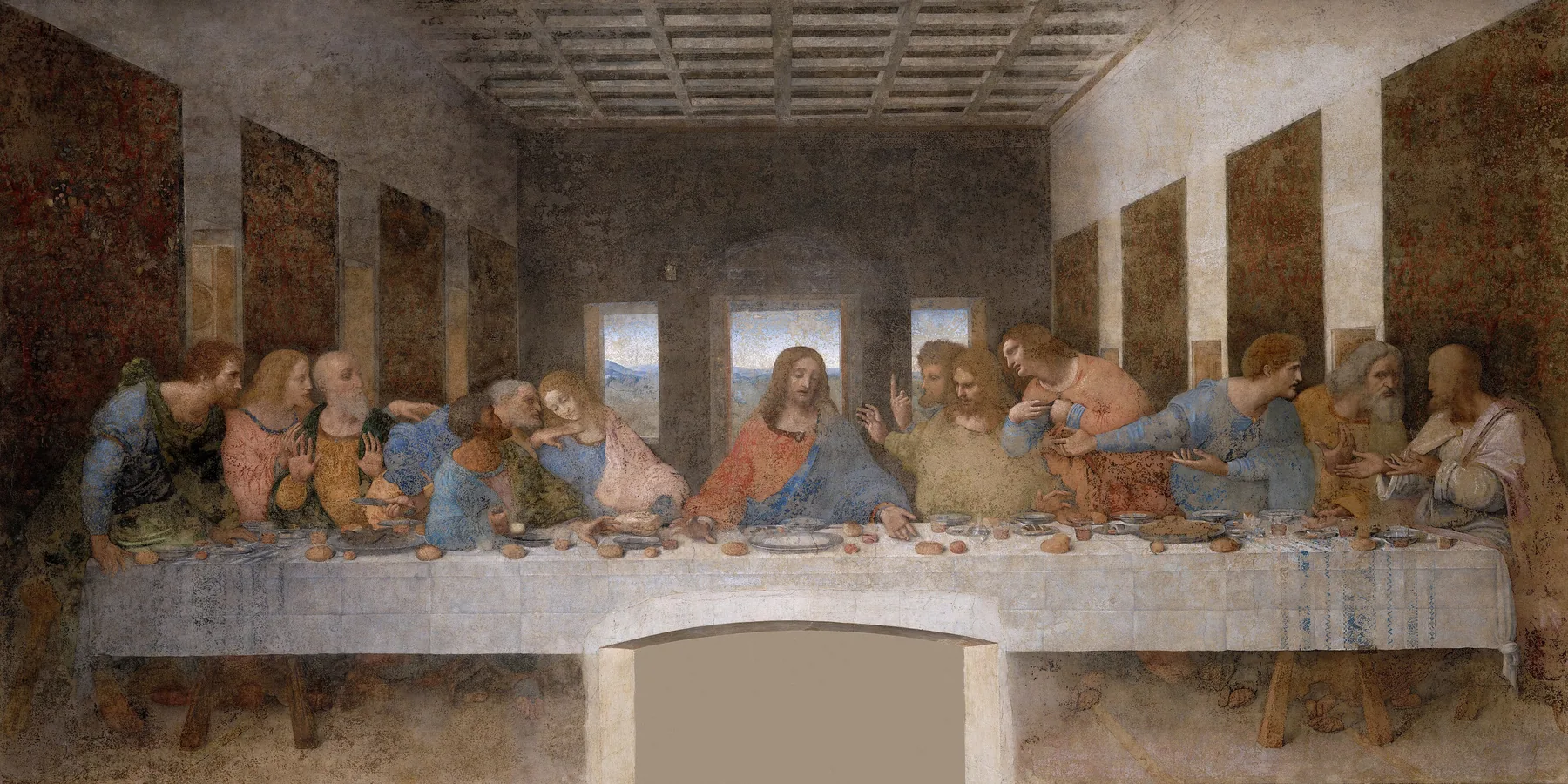
The mural occupies the end wall of the refectory in the Dominican monastery of Santa Maria delle Grazie, Milan. This placement is not decorative but functional: the monks dined beneath the scene, their meals framed by the dramatic tableau. The wall’s dimensions and its position at the far end of the room force the viewer’s gaze forward, creating a natural focal point that aligns with the narrative climax. Understanding the physical setting helps us see why Leonardo designed the composition to command an entire architectural space.
The project was commissioned by Ludovico Sforza, the Duke of Milan, who acted as Leonardo’s patron during his first extended stay in the city. Sforza’s support linked the work to the political and cultural ambitions of the Milanese court, providing Leonardo the resources and freedom to experiment on a grand scale. The ducal patronage underscores the mural’s role as both a devotional image and a statement of civic prestige, reflecting the intertwined worlds of art and power in the late fifteenth century.
Leonardo departed from the traditional fresco method, opting instead for an experimental technique that combined tempera—or perhaps oil—with two layers of dry preparatory ground. This departure gave him unprecedented control over subtle modeling of faces and gestures, allowing delicate tonal shifts that wet plaster could not support. However, the very same innovation proved fragile: the paint began to flake within a few years of completion. The choice of medium thus becomes a double‑edged sword, showcasing Leonardo’s scientific curiosity while foreshadowing the conservation challenges that would follow.
Over the centuries the mural has endured a cascade of damage. In 1652 a door was cut into the wall, physically removing Jesus’s feet from the composition. Later, Napoleon’s troops used the refectory as a stable, exposing the surface to soot, humidity, and neglect. The turmoil of World War II added a bomb blast that collapsed part of the refectory, threatening the work’s survival. Each episode stripped away original material, leaving us with a layered palimpsest of loss and restoration that deepens the painting’s historical resonance.
Scholars have measured the perspective viewpoint for the mural at roughly fifteen feet—about four and a half meters—above the floor. This height places the vanishing point substantially above normal eye level, compelling viewers to look upward and thereby heightening the sense of reverence toward the central figure. By positioning the perspective so high, Leonardo engineered a visual experience that draws the observer’s gaze along an invisible line toward Jesus’s head, reinforcing the narrative focus through architectural geometry.
Leonardo’s lifelong fascination with light finds vivid expression in the mural’s careful treatment of illumination and perspective. The interplay of bright windows and subtle shadows sculpts each apostle, granting them a three‑dimensional presence that seems to breathe within the flat wall. This meticulous handling of light not only defines form but also guides the viewer’s eye across the composition, reinforcing the spatial logic Leonardo built through linear perspective. The result is a scene that feels both physically real and psychologically immediate.
Scholars have long debated the meaning of the luminous window behind Jesus. Some argue that the light functions as a visual halo, a subtle radiance that sanctifies the central figure without the traditional gold disc. Others contend that the absence of a conventional halo emphasizes his humanity, allowing natural light to convey both divinity and flesh. This tension between symbolic illumination and realistic rendering illustrates Leonardo’s nuanced approach to theological representation, where light itself becomes a narrative device that can be read in multiple ways.
At the heart of the composition, Jesus announces that one of the apostles will betray him, gesturing toward the bread and wine that signal the institution of the Eucharist. Around the long table the disciples react with a spectrum of emotions—shock, denial, curiosity, anger—each captured with psychological depth. Leonardo’s rendering of these varied responses invites the viewer to share in the tension of the moment, turning a biblical episode into a study of human reaction and interaction, frozen in a single, dramatic instant.
Modern advanced rendering software can reconstruct the refectory as it appeared when Leonardo painted the mural, modeling the architecture, the high windows, and the original lighting conditions. This digital reconstruction reveals a complex interaction between light and space that the original work once commanded, allowing us to visualize the scene in its intended atmospheric context. By virtually restoring the visual environment, scholars gain fresh insight into Leonardo’s integration of art, architecture, and natural illumination, deepening our appreciation of his masterful design.
Through its daring technique, layered history, and luminous storytelling, Leonardo’s Last Supper continues to invite us to look, think, and feel across the centuries.