The story
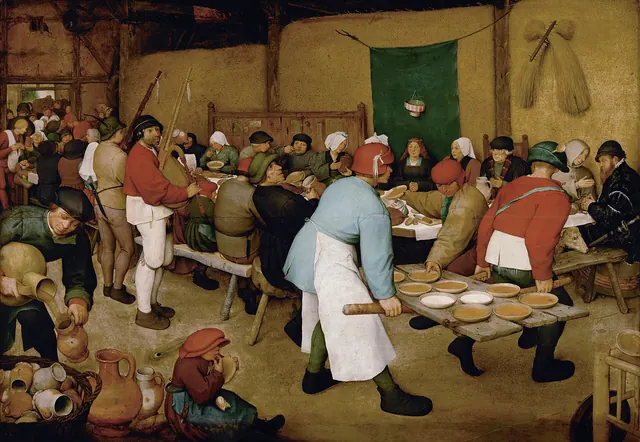
Imagine stepping into a 16th‑century village hall, where a bustling crowd of peasants gathers around a long table heaped with food, music, and laughter. In his masterpiece The Peasant Wedding, Pieter Bruegel the Elder freezes that very moment, turning a simple celebration into a vivid tableau of everyday life. The canvas brims with movement—a child tugging at a sleeve, a man raising a mug, a group of musicians poised to play. This opening glimpse invites us to look beyond the surface, to consider what Bruegel chose to emphasize, conceal, and perhaps critique within this lively feast.
The Peasant Wedding belongs to the collection of the Kunsthistorisches Museum in Vienna. Its presence there places Bruegel’s work among a distinguished group of European masterpieces, offering scholars and visitors a clear point of reference for his contribution to Flemish art. By being housed in this renowned institution, the painting is accessible for study and public appreciation, allowing its intricate details and social observations to be examined within a broader narrative of art history. The museum setting thus frames the work as a key example of 16th‑century genre painting, inviting viewers to engage with its lively scene.
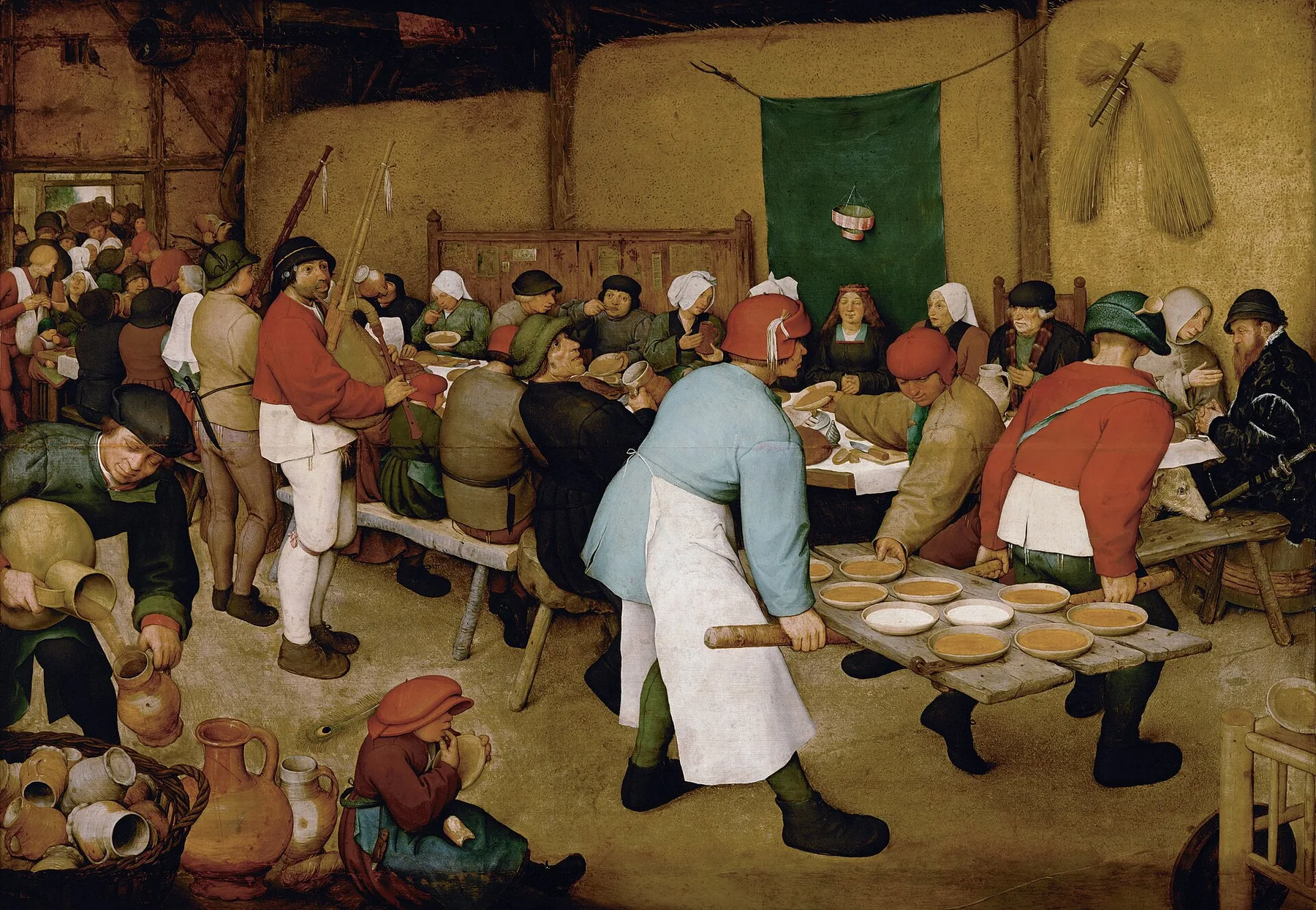
At the centre of the banquet, the bride occupies a raised bench, clearly set apart from the surrounding revelers. This placement signals her place of honor, a visual cue that Bruegel uses to anchor the ceremony within the chaotic scene. Her modest dress and calm demeanor contrast with the animated gestures of the guests, drawing the eye to the focal point of the marriage. By highlighting her position, Bruegel not only records a customary social hierarchy but also invites us to consider the quiet dignity that persists amid the surrounding merriment. The bride’s poised presence becomes a steady anchor in a sea of exuberant activity.
Unlike the clearly identified bride, the groom’s identity remains a matter of speculation. One prevailing theory points to the man standing in the foreground, loudly calling for more drink, as the likely husband. His animated posture and central location suggest a role of importance, yet Bruegel offers no explicit sign—no wedding garb or ring—to confirm this reading. This ambiguity allows viewers to engage with the painting as a puzzle, reflecting how historical records of everyday people often leave gaps that artists can choose to fill or leave open. The uncertain groom invites us to contemplate the fluidity of social roles within the festive tableau.
Bruegel’s attention to detail extends to the very furnishings of the feast. A plain blanket draped across the back wall serves as a makeshift tapestry, while an old door, propped open, functions as a serving tray for the food. These humble objects reveal the resourcefulness of a peasant community, turning everyday items into decorative and functional pieces for celebration. By embedding such specifics, Bruegel not only adds realism but also underscores the modest means of his subjects, inviting us to appreciate the ingenuity embedded in their festivities. The blanket and door become silent witnesses to a world where practicality and festivity intertwine.
In the foreground, a small child presses a finger to its mouth, a gesture traditionally linked to hunger in early modern visual culture. This subtle detail stands out amid the abundance of food on the table, hinting at underlying scarcity or the ever‑present threat of famine in rural life. Bruegel’s inclusion of this emblem invites viewers to look beyond the surface celebration and consider the precariousness that shadows even the most joyous occasions for peasants of his time. The child’s quiet pose becomes a poignant reminder that prosperity and want often coexist side by side in the lived reality of the 16th‑century countryside.
Among the revelers, a group of musicians holds a set of bagpipes, an instrument closely associated with folk celebrations in the Low Countries. Their inclusion adds an audible dimension to the visual scene, suggesting lively tunes that would have accompanied the feast. Bagpipes also reinforce the painting’s authenticity, grounding the event in a specific regional soundscape that modern audiences can almost hear, thereby enriching our immersion in Bruegel’s world. The presence of these musicians underscores the communal nature of the celebration, where music, food, and dance intertwine to create a vibrant tapestry of rural life.
Some scholars read the painting as a subtle moral commentary on gluttony, pointing to the child’s finger‑in‑mouth gesture as a visual warning against excess. In a scene overflowing with food and drink, this tiny emblem of hunger may serve as a reminder that indulgence can mask deeper deprivation. While Bruegel never states this outright, the juxtaposition of abundance and the child’s silent plea invites contemplation of the social tensions between feast and famine that defined peasant life. This interpretive layer adds a reflective dimension to the work, encouraging viewers to question the balance between celebration and scarcity.
The work is executed in oil on canvas and measures 114 × 164 cm. This sizable format allows Bruegel to populate the scene with a multitude of figures and details, each rendered with the subtle tonal variations that oil paint affords. The medium’s capacity for layered glazes gives the surface a luminous depth, while the canvas support provides a flexible ground for the artist’s intricate brushwork. The dimensions also create an immersive field of view, drawing the viewer’s eye across the bustling banquet and inviting close inspection of the myriad gestures and objects that compose the narrative.
The inclusion of a blanket turned into a makeshift tapestry and an old door repurposed as a serving tray does more than furnish the banquet; it speaks to the ingenuity of a community that makes do with what is at hand. By portraying these everyday objects in a celebratory context, Bruegel highlights the blurred line between necessity and festivity, suggesting that even humble items can acquire symbolic weight when woven into communal rites. This visual choice reinforces the painting’s documentary quality, inviting viewers to recognize the material culture of 16th‑century peasants and the subtle ways they transformed ordinary surroundings into a shared spectacle.
The interpretation that the child’s finger‑in‑mouth gesture serves as a moral warning against gluttony invites a layered reading of the scene. While the banquet overflows with food, the subtle emblem of hunger suggests that abundance may conceal underlying need, a theme resonant in a society where famine could strike without warning. This reading does not diminish the painting’s celebratory tone but adds a reflective undercurrent, prompting viewers to contemplate the paradox of plenty amid poverty. By embedding such a nuanced visual cue, Bruegel encourages a dialogue between surface joy and deeper social commentary, enriching the work’s emotional and intellectual resonance.
And so, Bruegel’s Peasant Wedding continues to speak across centuries, inviting us to see the ordinary as extraordinary.