The story
Setting the Scene
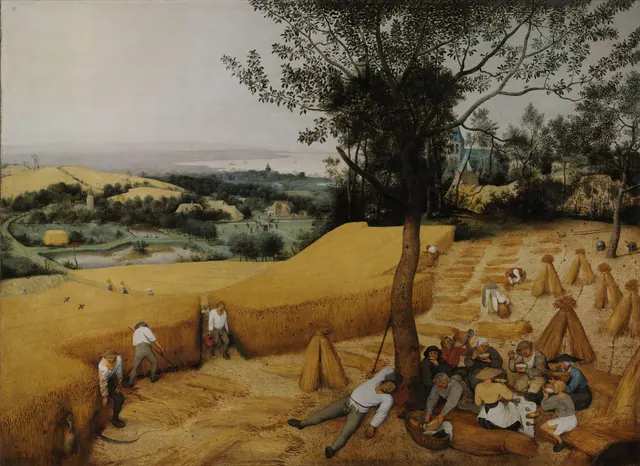
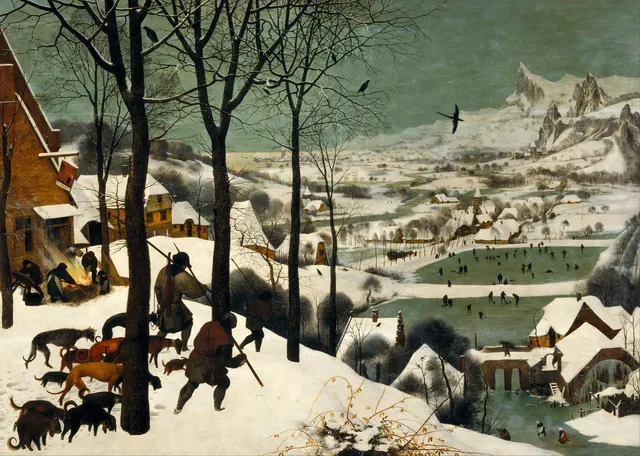
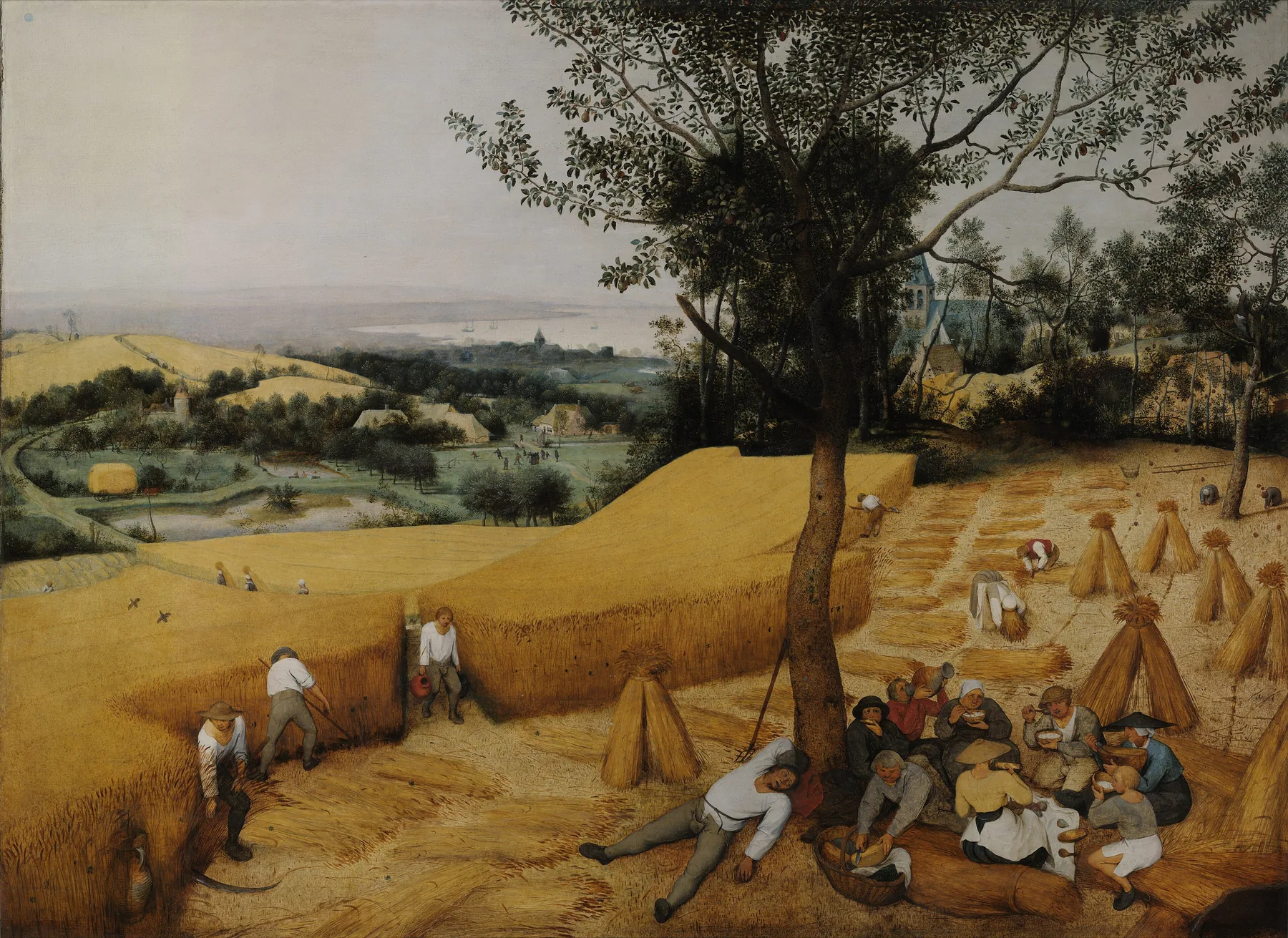
Imagine a 16th‑century merchant inviting guests to his country home, the walls of the dining‑room alive with scenes of the countryside. Among those panels hangs Pieter Bruegel the Elder’s The Harvesters, the central piece of a six‑part cycle of the seasons that he commissioned specifically for that space. The series was intended to accompany meals, each panel marking a slice of the year. In this particular canvas Bruegel turns his eye to the late summer months, a moment when the fields are heavy with ripened grain. The painting therefore not only decorates a private room but also anchors the viewer in the rhythm of the agricultural calendar, signalling the transition from the heat of August toward the onset of autumn.
The Harvesters is widely understood to represent the months of August and September, the tail‑end of summer when the wheat stands golden and the harvest is at its peak. By placing this scene at the centre of the seasonal series, Bruegel creates a visual bridge between the abundance of midsummer and the quieter, cooler months that follow. The viewer is invited to feel the weight of the grain, the warmth of the sun, and the subtle shift toward the turning of the year, all without a single calendar page in sight.
A New Kind of Landscape
Unlike many of his contemporaries, Bruegel chooses to present a landscape that is wholly secular. The Harvesters stands as an early example of a painting that celebrates the natural world for its own sake, without invoking a biblical story or a saint’s miracle. In doing so, the work removes the traditional religious pretext that had long framed landscape art, allowing Christian devotion to give way to a fresh humanism that places ordinary people and their labour at the centre of visual attention. This shift reflects a broader cultural movement toward valuing everyday experience as worthy of artistic representation.
The Palette of Summer
The painting’s colour scheme is dominated by warm yellow and yellow‑brown tones that bathe the ripening wheat in a luminous glow. Blue appears only in a subdued, grayish hue that recedes into the distant sky, while greens are largely muted, allowing the earth tones to dominate the surface. Accents of rich red and bright yellow punctuate the scene, catching the eye in small details such as a banner or a piece of clothing. This restrained palette creates a serene, sun‑lit atmosphere that reinforces the sense of a quiet, abundant harvest.
Guiding the Eye
A large, dark, thick vertical tree trunk rises from the foreground, its bark rendered with bold, confident strokes. This arboreal pillar functions as a directional device, drawing the viewer’s eye from the top edge of the canvas down its length and finally to the group of harvesters gathered in its shade. The trunk’s shadow creates a natural frame that both isolates and highlights the workers, while also anchoring the expansive landscape and giving the composition a clear vertical rhythm that balances the horizontal sweep of the fields.
Figure and Field
In the lower left of the canvas a stooping woman bends over the wheat, her posture forming a clear triangular shape. This geometric arrangement echoes the surrounding stalks, suggesting a visual merging of figure and landscape. The triangle not only creates a rhythmic visual beat within the broader composition but also reinforces the idea that the people are an integral part of the land they tend, their bodies echoing the very shape of the grain they harvest.
Patron’s Taste and Idealised Labor
By foregrounding harmony with nature and the season’s bounty while downplaying the difficulty of agricultural labour, Bruegel was responding to the desires of his wealthy urban patron. The scene presents an idealised vision of rural abundance, offering a comforting tableau that aligns with the patron’s taste for picturesque, prosperous countryside imagery. At the same time, the work shows the peasant labourers in a sympathetic yet idealised light, balancing realism with a gentle romanticism that would have pleased a private dining‑room audience seeking both visual pleasure and a subtle affirmation of social order.
Conclusion
The Harvesters stands as a masterful blend of colour, composition and cultural intent. Its warm palette, guiding tree, and subtle geometric figures invite the viewer into a world where everyday labour is celebrated without overt moralising. As part of a seasonal cycle commissioned for a private dining‑room, it reflects both the practical function of marking the calendar and the patron’s desire for an elegant, human‑centered view of the world. In Bruegel’s hands, a simple field becomes a timeless statement about the relationship between people, the land, and the passing of the seasons.
Thank you for joining us as we explored Bruegel’s Harvesters, where the quiet rhythm of the fields still speaks across the centuries.