The story
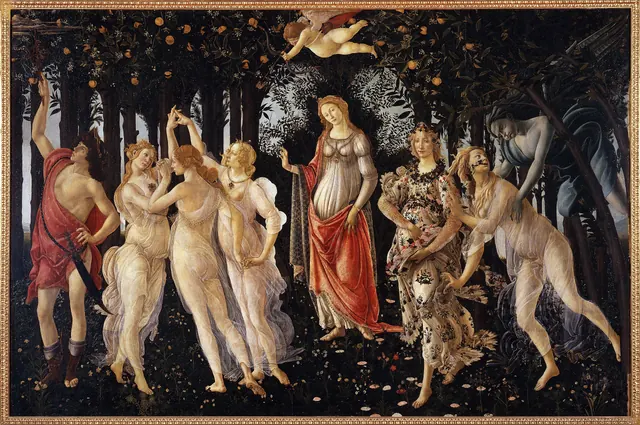
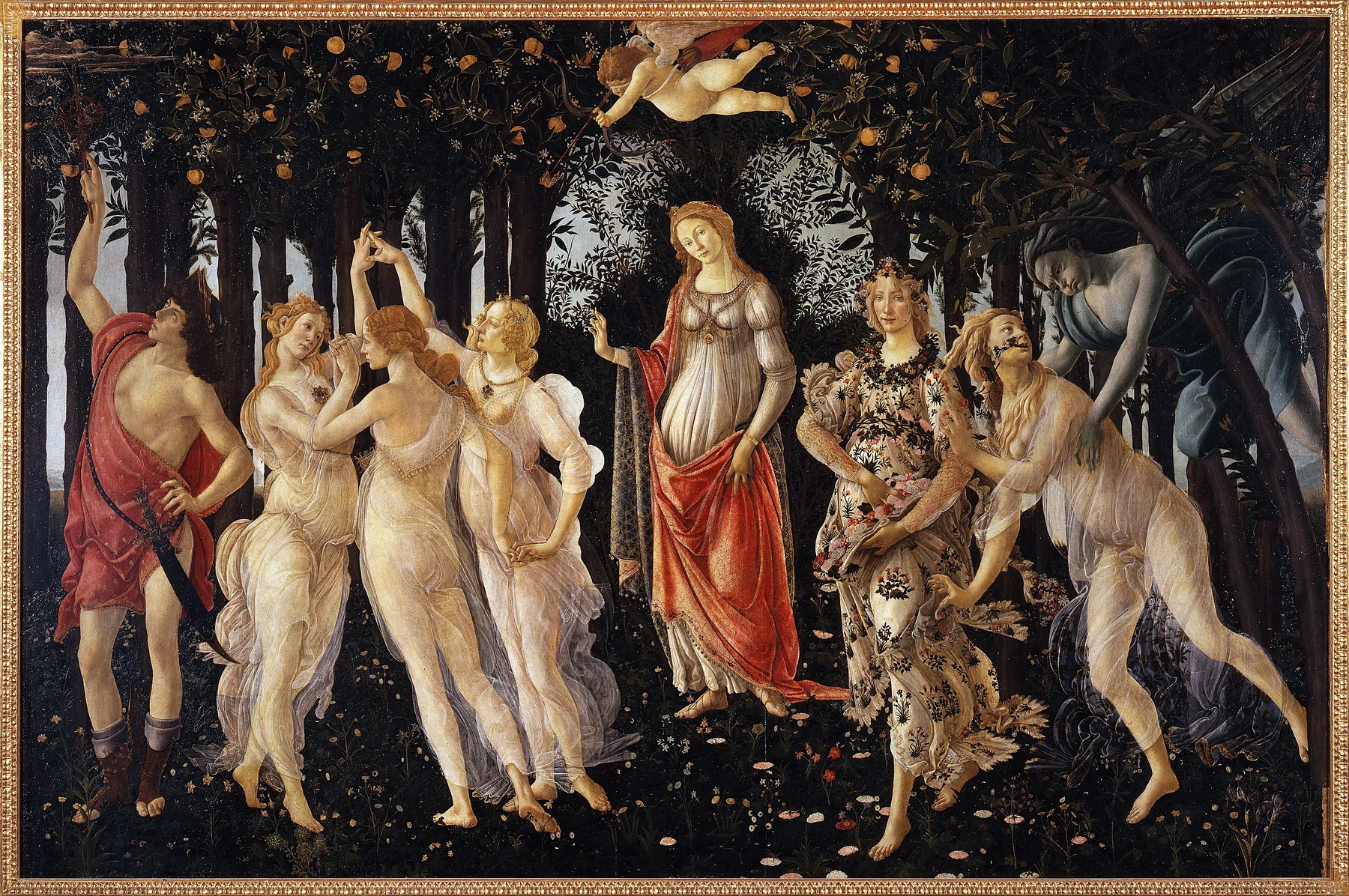
The painting is usually known as the Primavera, also called “Spring.” This title immediately signals the work’s association with the season of renewal, a connection that has endured for centuries. It was created by the Florentine master Sandro Botticelli, whose life spanned from 1445 to 1510, placing the artist squarely in the heart of the Italian Renaissance. By foregrounding the name and the hand that executed it, we anchor the viewer in the work’s most fundamental identifiers, setting the stage for a deeper look at its material and historical context.
The work was painted by Botticelli sometime between 1477 and 1482, a period that falls toward the end of the fifteenth century. Those years mark the mature phase of Botticelli’s career, when his technical skill and compositional confidence were fully developed. Knowing the approximate dates helps us understand the painting’s place within the broader timeline of Florentine art, linking it to the stylistic currents that defined the closing years of the Quattrocento. This chronological anchor also clarifies why the work reflects the sophisticated cultural atmosphere of late‑fifteenth‑century Florence.
Primavera is a large tempera painting executed on a poplar wood panel. Tempera, a fast‑drying medium made from pigment mixed with egg yolk, allows for fine, luminous detail, while the poplar support provides a sturdy, flat surface suitable for a work of considerable size. The combination of these materials was common in Florentine workshops of the period, and it contributes to the crisp outlines and delicate coloration that define the composition. Recognizing the medium and support deepens our appreciation of the technical choices Botticelli made to achieve the painting’s visual clarity.
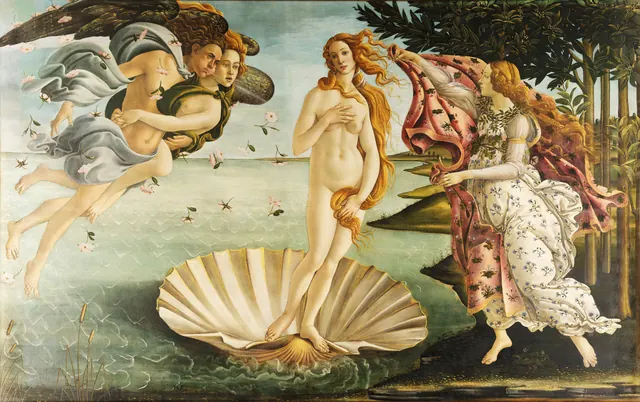
The painting originally hung in the summerhouse of the Medici family, serving as a companion piece to Botticelli’s celebrated Birth of Venus. Placing the two works together would have created a thematic pair, each exploring mythological subjects within a private, leisurely setting. The summerhouse context underscores the Medici’s role as patrons who favored intimate, classical décor for their personal retreats, and it explains why Primavera was conceived alongside another iconic mythological scene.
Later, the painting was found in a house on Via Larga—today known as Via Cavour—belonging to the heirs of Lorenzo di Pierfrancesco de’ Medici, a cousin of Lorenzo the Magnificent. From that location it was transferred to the Villa di Castello, another Medici country residence. In 1550 the chronicler Giorgio Vasari described Primavera together with the Birth of Venus, confirming that the two works continued to be linked within the Medici collection. This documented movement traces a clear line of ownership through prominent Medici holdings across generations.
The scene unfolds within a semicircular meadow, theoretically the garden of Venus, where a variety of plants and trees emerge from the grass. Within this setting, the composition includes nine mythological figures: Mercury, the Three Graces, Venus, a blindfolded Cupid, Zephyrus, Chloris—who transforms into Flora—and other attendant figures. The figures, from left to right, are Mercury; the Three Graces; Venus; the nymph Chloris; Flora; and Zephyr, with Cupid positioned above the group. This arrangement creates a harmonious visual rhythm that guides the viewer’s eye across the garden, linking each deity to the surrounding flora.
At least forty‑two identifiable plant species are depicted, comprising fourteen green plants and twenty‑eight flowering plants. The botanical rendering displays a level of accuracy that suggests possible reference to contemporary herbaria, indicating an attentive observation of nature. This detailed inventory turns the imagined garden into a living catalogue of flora. Moreover, the dark colour of the vegetation observed today is in part due to the ageing process of the original pigment, a chemical change that has deepened the hue of the leaves over centuries. Together, these facts reveal both the painting’s scientific precision and its evolving material condition.
Scholars interpret the scene as a Neoplatonic allegory concerning the changing of the seasons and the virtue of Venus at the centre. Some argue that the painting reflects Botticelli’s interest in Neoplatonism, blending pagan and Christian identities within a single visual program. It is probable that Botticelli painted the work on commission for the Medici family, whose classical interests shaped many Florentine artists of the period, and scholars have suggested the painting was likely commissioned by the Medici. The work also employs Neoplatonic themes drawn from Ovidian myth, reinforcing its philosophical underpinnings. Finally, the painting commemorated the Florentine Renaissance—a cultural, political, and economic rebirth of the Florentine Republic—linking the artwork to the broader civic renewal of its time.
Thank you for joining us as we explored the verified story behind Botticelli’s Primavera.