The story
Introducing the work
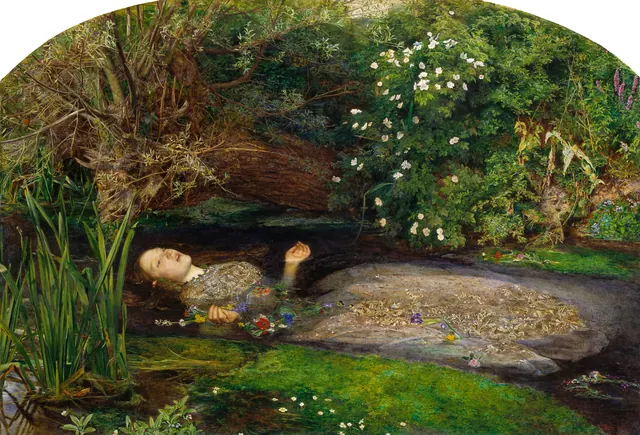
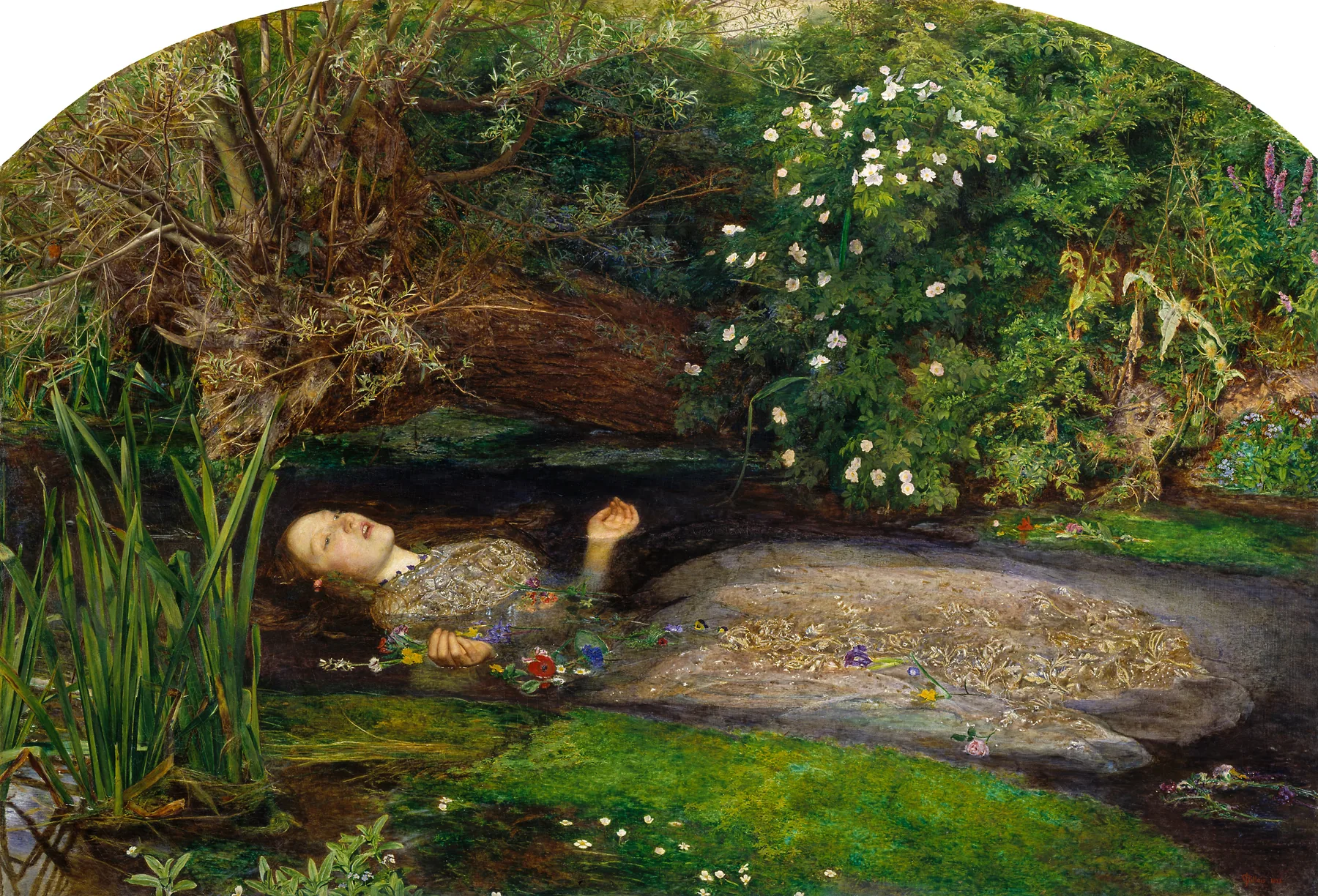
John Everett Millais, a leading figure of the mid‑nineteenth‑century British art scene, is the hand behind the haunting canvas titled Ophelia. The work emerged over a brief but intense period, begun in 1851 and completed the following year, with the production date officially recorded as 1852. These dates place the painting squarely in the early phase of Millais’s career, a time when he was actively shaping the visual language that would define his generation. Knowing exactly when Millais set brush to canvas helps us understand the painting as a product of its moment, reflecting the artistic ambitions and technical experiments of that specific window in history.
Materials and dimensions
Millais chose oil on canvas as his medium, a combination that offered both the richness of pigment and the flexibility to build layers of translucent glaze. Oil paint allows the artist to model subtle shifts of light on water, flesh, and foliage, while the canvas surface provides a sturdy yet receptive ground for the intricate brushwork that defines the piece. The decision to work in oil therefore directly supports the painting’s luminous quality and the fine detail that viewers encounter when they approach the work closely.
Measuring just thirty by forty‑four inches, the canvas is modest in scale, a size that invites the viewer to step near the surface and engage with the scene on an intimate level. This relatively small format means that every leaf, ripple, and facial expression occupies a personal visual field, encouraging prolonged observation rather than a fleeting glance. The dimensions thus become an integral part of the viewing experience, shaping how the painting is perceived in a gallery setting.
Working on landscape and figure
To capture the riverbank that frames Ophelia, Millais left his London studio and painted the landscape portion en plein air at the Hogsmill River in Ewell, Surrey. Working directly from nature, he recorded the reeds, trees, and the play of light on water with a fidelity that anchors the composition in a recognizable environment. After completing this outdoor study, he returned to his Gower Street studio in London to render the figure of Ophelia, allowing him to focus on the delicate anatomy and expression of the sitter within a controlled setting. This two‑stage approach separates the observed natural world from the studio‑crafted human element.
The physical support for the painting was prepared on 7 June 1851 when Millais purchased two pieces of canvas from the dealer Charles Roberson for fifteen shillings. The canvases were sold as a double canvas, one sheet mounted directly behind the other, creating a smooth, stable surface that could accommodate the multiple layers of glaze and fine brushwork Millais intended. This construction provided the artist with a seamless ground on which to build the intricate details that define the work, ensuring that the final surface would remain even and receptive to the subtle tonal variations required for the scene.
The model and her experience
The young woman who posed for Ophelia was Elizabeth Siddall, who at the time was nineteen years old. Siddall had been discovered by fellow artist Walter Deverell and would later marry Dante Gabriel Rossetti in 1860. Her connection to the Pre‑Raphaelite circle situates her within the network of artists who frequently used each other as models, providing a personal link between the painter and the subject of this iconic image.
For the figure of Ophelia, Siddall posed in a bathtub filled with water, while oil lamps were placed underneath to keep the water warm. The conditions proved demanding; she became very cold during the session and subsequently fell ill. These verified details illustrate the physical circumstances under which the model maintained the pose, offering a concrete glimpse into the practical challenges faced during the painting’s execution.
Provenance and interpretive observations
Today Ophelia hangs in the Tate Gallery, where it has been on public view since its inclusion in the original Henry Tate Gift of 1894. Its presence in this national institution reflects the painting’s recognized importance from the close of the nineteenth century and ensures that it remains accessible to scholars and visitors alike within a curated context of British art.
The work was part of the original Henry Tate Gift in 1894, a collection that formed the foundation of the Tate’s holdings. Being included in this inaugural donation highlights the painting’s status among the most valued British artworks of its time, and it continues to be a focal point for audiences exploring the Pre‑Raphaelite legacy.
Observers have noted that distress is most visible in the face of Millais’s Ophelia, a detail that reflects the words of fellow Pre‑Raphaelite William Hunt about the focus on the inner self in their art. The visible expression aligns with that critical commentary, offering a concrete point of reference for how the painting’s emotional tone was perceived by contemporaries.
Millais’s extreme detail and precise brushwork give the painting a level of photorealism that surpasses most of his contemporaries. The meticulous rendering of each leaf, ripple, and fold creates a visual experience where the eye can linger on minute elements, revealing a technical mastery that distinguishes the work within the broader field of mid‑nineteenth‑century British painting.
The painting’s small size, thirty by forty‑four inches, encourages intimate, prolonged viewing, a quality noted by later observers. Because the canvas does not dominate the viewer’s field, it invites a closer, more personal engagement, allowing the intricate details to be examined over time rather than consumed in a single glance.
Through careful observation of these verified facts, we gain a clearer picture of how Millais’s Ophelia was conceived, executed, and preserved, inviting each viewer to experience the painting with both its technical brilliance and its enduring place in art history.