The story
Hook – An Icon Is Born
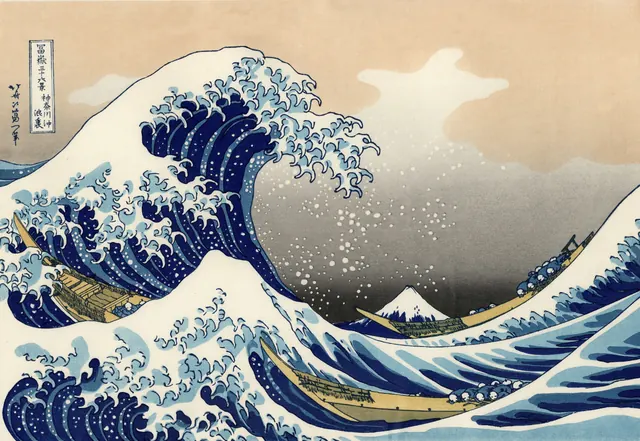
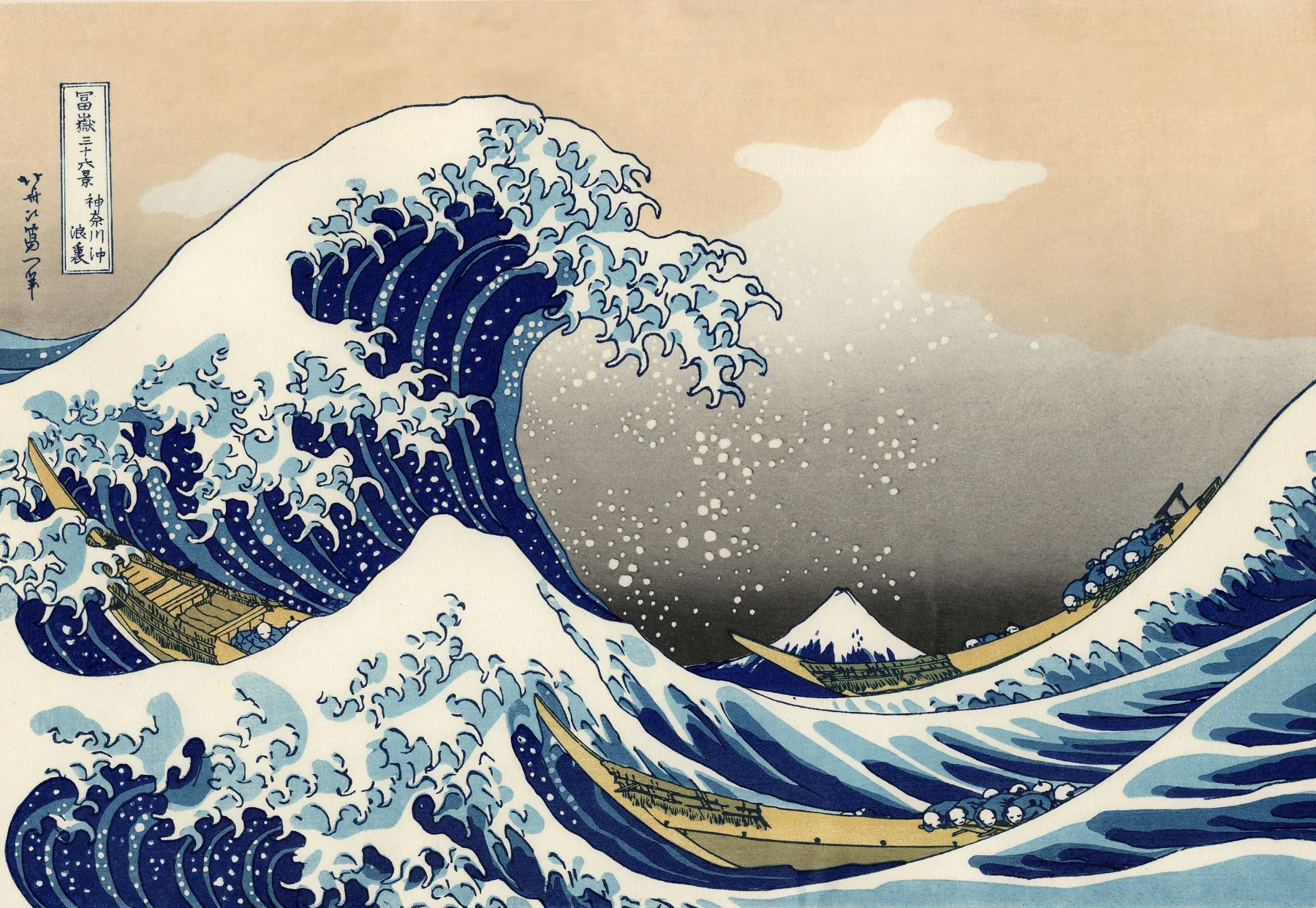
The image known worldwide as The Great Wave first appeared under the Japanese title “Under the Wave off Kanagawa,” part of Hokusai’s ambitious series Thirty‑six Views of Mount Fuji. The Metropolitan Museum of Art notes that this single print has become a global icon, instantly recognizable in both East and West, and synonymous with Japanese art itself. That reputation rests not only on the dramatic surge of the sea but on the way the image captures a moment of tension between nature and human endeavor. As we open on the towering crest, the viewer is drawn into a scene that has transcended its original context to become a cultural shorthand for power and beauty.
Creation – Artist, Date, and Market
Born in Edo in 1760, Katsushika Hokusai spent a lifetime mastering the ukiyo‑e tradition, and by the early 1830s he was at the height of his creative powers. Scholars place the creation of The Great Wave around 1830 to 1832, a period when the artist was experimenting with bold compositions and new pigments. Knowing the precise window of production helps us understand the print as a product of a mature master, confident enough to push the limits of his medium. It also situates the work amid a bustling Edo that was eager for fresh visual experiences, making the wave both a personal and a public statement.
The print was executed as a woodblock, using ink and vibrant color on paper—a hallmark of ukiyo‑e production. What sets this particular sheet apart is its association with the Eijudō publishing house, which advertised the series for the New Year’s festivities of 1831, highlighting the newly available Prussian blue pigment. This synthetic hue, imported from Europe, offered a depth of color previously unattainable with traditional indigo, allowing Hokusai to render the ocean’s shadows with an intensity that still astonishes viewers. The combination of a commercial launch and a cutting‑edge pigment underscores how market forces and technological innovation converged to shape the visual impact of the wave.
Seeing the Wave – Visual Details
The composition is dominated by a massive, curling wave that sweeps from the left, its claw‑like white foam poised to crash over three small fishing boats. The foremost vessel, tipped upward, bears a lone figure at its stern, while a second boat in the centre‑right rides the trough, its crew crouched together, heads white against blue garments. A third boat on the far right crests a smaller swell, its occupants huddled tightly. In the distant background, a snow‑capped Mount Fuji rises as a faint triangle, barely disturbing the sky’s soft beige‑to‑light‑brown gradient. Scattered droplets of white foam punctuate the air, and subtle gray shadows within the wave’s hollow give the scene a palpable sense of depth.
Technique – Double Printing and Texture
Hokusai achieved the print’s striking blues through a sophisticated double‑printing process. First, outlines were printed using a mixture of Prussian blue and indigo, establishing the structural lines of the wave and boats. A second pass laid down a pure layer of Prussian blue over the already printed stripes, producing a contrast between a deep gunmetal hue and a bright, saturated blue that seems to recede and advance simultaneously. Because each carved block presses into the paper, the surface is subtly indented, so the white foam, the bright blue crest, and the darker blue shadows sit at slightly different heights. This tactile variation creates a delicate three‑dimensional effect that invites the eye to move across the print’s surface.
Composition – Geometry in Motion
The arrangement of circles and triangles within the image is no accident; the curling wave forms a series of overlapping arcs that suggest circular motion, while the sharp peak of Mount Fuji and the angular hulls of the boats introduce triangular forms. These geometric cues echo the natural forces at play: the wave’s circular energy pushing forward, the mountain’s stable triangle anchoring the composition, and the boats’ pointed bows cutting through the tumult. By embedding these shapes within the narrative, Hokusai reinforces a visual rhythm that guides the viewer’s gaze from the crest, down the trough, and finally toward the distant, serene summit, creating a harmonious balance between chaos and order.
Reception – Early Impressions and Western Influence
According to museum scholarship, the version held by the Metropolitan Museum is likely one of the earliest impressions ever printed, capturing the fresh vigor of Hokusai’s new techniques before later re‑carvings altered the image. When the print arrived in Europe during the latter half of the nineteenth century, it sparked a wave of fascination among Western artists and musicians, who were drawn to its bold composition and exotic palette. Its influence can be traced through the works of the Impressionists, who admired the flat areas of color, and even into modern music, where composers referenced its dramatic tension. The Great Wave thus served as a cultural bridge, reshaping artistic vocabularies far beyond its Japanese origins.
Provenance – From Edo to the Havemeyer Collection
The particular sheet we examine today entered the United States as part of the H. O. Havemeyer Collection, bequeathed by Mrs. Havemeyer in 1929. The Havemeyers were pioneering American collectors of Japanese art, and their generous donation helped introduce ukiyo‑e prints to a broader audience, cementing the medium’s reputation in Western museums. By residing in a prominent public collection, The Great Wave has been accessible to scholars and the public alike, ensuring its continued study and admiration. Its presence in such a historic collection underscores the print’s journey from a commercial New Year’s release in Edo to a treasured masterpiece displayed in institutions around the world.
Conclusion – Enduring Power of a Single Wave
From its daring use of new pigments and double‑printing techniques to its geometric precision and the way it captured imaginations across continents, The Great Wave stands as a testament to Hokusai’s mastery and to the transformative power of print. Its ability to convey both the raw force of nature and the fragile resilience of the fishermen below invites endless reinterpretation, while its journey from a bustling Edo workshop to the walls of major museums illustrates how a single image can cross cultural boundaries and endure for centuries. In every brush of blue and curl of foam, we encounter a moment where art, technology, and human curiosity converge.
Look again at the crest—there, the wave holds a world of stories.