The story
Introducing the Masterwork
Imagine stepping into a sun‑drenched garden where three ethereal figures entwine in a timeless dance. That is the scene Rubens captured in his celebrated canvas, The Three Graces. Painted by the Flemish Baroque master Peter Paul Rubens, the work bears his unmistakable vigor and sensuality, inviting viewers to linger on the harmony of form and feeling. The title alone signals a mythic subject, while Rubens’ hand promises a richness of colour and movement that has fascinated audiences for centuries.
When and How Rubens Created It
Rubens set his brush to canvas in the early 1630s, a period of mature confidence for the artist. Between 1630 and 1635 he laid down oil on a sturdy oak panel, a medium that allowed him to build luminous layers and capture the supple flesh of his figures. The oak’s grain subtly surfaces in the background, grounding the mythic scene in a tangible, earthly material. This timeframe aligns with Rubens’ later years, when his technique had reached a dazzling synthesis of colour, light, and anatomical precision.
The Circular Embrace
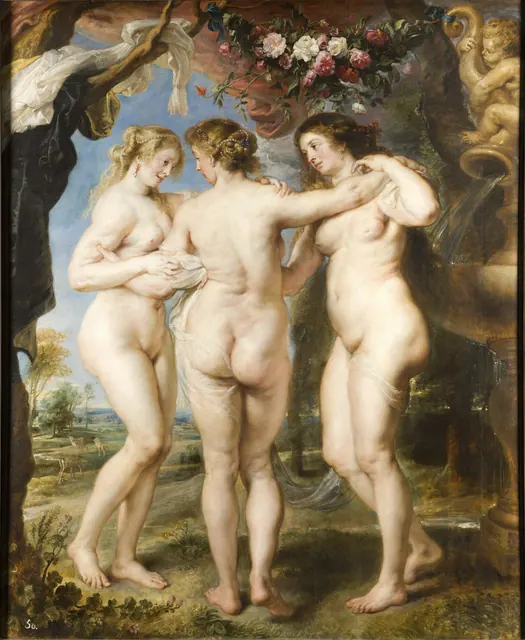
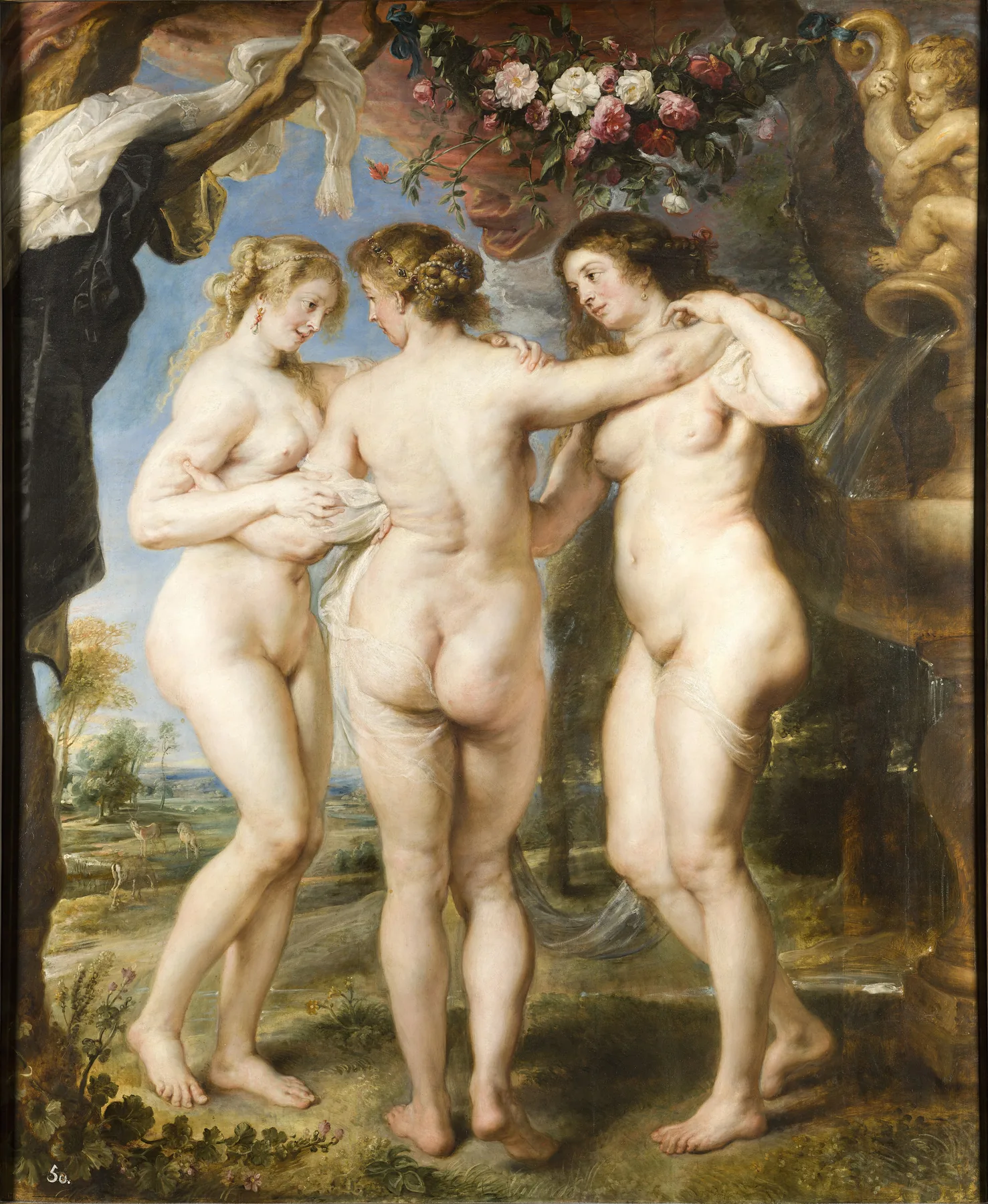
At the heart of the composition the three goddesses form a gentle circle, their bodies leaning toward one another as if caught in a slow, graceful waltz. Their feet are positioned to suggest a subtle step, a choreography that conveys both intimacy and unity. This circular embrace creates a visual rhythm that draws the eye around the canvas, reinforcing the theme of harmonious connection that the title evokes. Rubens’ handling of the figures’ drapery and posture amplifies the sense of movement without breaking the serene mood.
Faces of Affection
The woman on the left, with blonde curls gathered in an up‑do crowned by a pearl headband, gazes toward the centre, her red and green earring catching the light. Scholars identify her as Helena Fourment, Rubens’ second wife, whom he married in December 1630. Her presence here, shortly after their union, may echo the painter’s personal joy, a reading supported by experts who note the tender intimacy of the pose. The figure seen from behind, her hair adorned with jeweled stones, rests a hand on the shoulder of the woman on the right, while the brown‑haired goddess on the far side touches her own shoulder, completing the circle of affection.
Fountain, Cupid and Blossoms
To the right of the trio, a stone fountain arches upward, water spilling from a sculpted spout. A small, winged Cupid perches nearby, his presence a playful reminder of love’s mischievous side. Above, a dense garland of roses—white, pink and deep red—hangs from a branch, their petals spilling onto the scene like a fragrant veil. These elements, noted in the catalogue of the work, intertwine with the central figures, adding layers of narrative that celebrate both sensuality and the abundance of nature.
Deer in the Distant Landscape
Beyond the garden’s lush foreground, a group of deer moves through the trees, their silhouettes softened by the hazy sky. One deer faces left, its antlers catching a glint of light; another grazes with its head lowered, while a third stands farther back, adding depth to the pastoral setting. Their quiet presence complements the painting’s theme of natural harmony, echoing the gentle rhythm established by the three goddesses.
Symbols of Love and Plenty
Art historians read the roses, the deer, and the playful Cupid as a visual language of love. The roses, with their layered petals, have long symbolised beauty and affection, while the gentle deer, creatures of the forest, evoke the tenderness of a courtly romance. Cupid, ever the mischievous match‑maker, reinforces the theme that love is both a natural force and a divine blessing. Together, these motifs weave a tapestry of desire and generosity that underpins the entire composition.
From Rubens’ Studio to a Royal Collection
After Rubens passed away, his estate entered an auction where the Spanish monarch Philip IV recognized the masterpiece’s value and acquired it for his royal collection. This purchase not only secured the work’s preservation but also placed it within the cultural heart of the Spanish court, where it would be admired alongside other treasures of the Habsburg dynasty.
A Near‑Tragic Survival
Centuries later the canvas found a home in the Alcázar of Madrid, but around a hundred and fifty years after its arrival, King Charles III deemed the work indecent and ordered it destroyed. Thanks to the intervention of the Real Academia de Bellas Artes, the painting was rescued from the flames and preserved for future generations, a testament to the enduring power of art to outlive even royal edicts.
A Personal Treasure
Scholars suggest that Rubens painted The Three Graces not for a patron but for his own collection, a private celebration of love and abundance. This personal context explains the intimate portrayal of his wife and the indulgent decorative motifs, indicating that the canvas served as a visual diary of his domestic happiness rather than a commissioned allegory.
Viewing the Masterpiece Today
Today, visitors can encounter Rubens’ masterpiece in Room 029, where the painting hangs at eye level, inviting close inspection. A modest painted number ‘50.’ rests in the lower left corner, a quiet reminder of the museum’s cataloguing system. As you stand before the canvas, the interplay of light on the oil, the delicate fabrics, and the lively garden scene all converge, offering a moment to contemplate the artist’s vision of grace and love.
Take a moment to linger on Rubens’ radiant circle of grace, and let its quiet joy linger in your thoughts.