The story
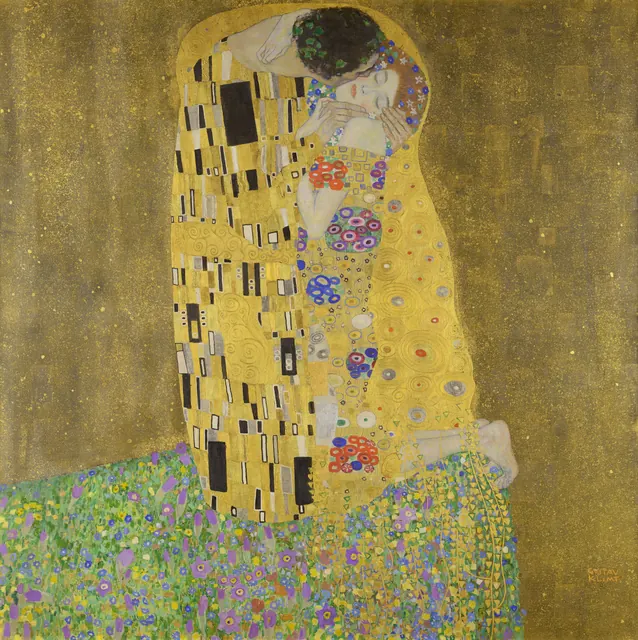
Even before you step into a museum, the image of a gilded couple locked in an intimate embrace is likely familiar. Across university dormitories worldwide, posters of Gustav Klimt’s The Kiss adorn walls, turning the masterpiece into a cultural shorthand for love. This extraordinary reach makes the painting one of the most recognised and reproduced works on the planet, a fact documented by its pervasive presence in student rooms. As we turn our gaze to the original canvas, we begin to understand how a single image can become a global visual language.
Created in the heart of the Austro‑Hungarian capital, The Kiss emerged from Klimt’s Vienna studio in the early years of the twentieth century. Official records place its execution in 1907, while contemporary scholarship notes the work was painted in Vienna around 1908, situating it at the very cusp of modernism. This temporal and geographic setting ties the canvas to a city buzzing with artistic experimentation, where the Secession movement was reshaping visual culture. The painting’s birth in this vibrant milieu helps explain its blend of tradition and daring innovation.
In 1905, Gustav Klimt made a decisive break from the Vienna Secession, leaving the group to follow a more personal artistic path. Freed from the collective’s manifestos, he turned inward, cultivating a visual language rich in decorative opulence and symbolic depth. This newfound independence paved the way for the sumptuous style that defines The Kiss, allowing Klimt to experiment with materials and motifs that would become hallmarks of his later Golden Period. The painting thus stands as a testament to the creative freedom he claimed after his departure.
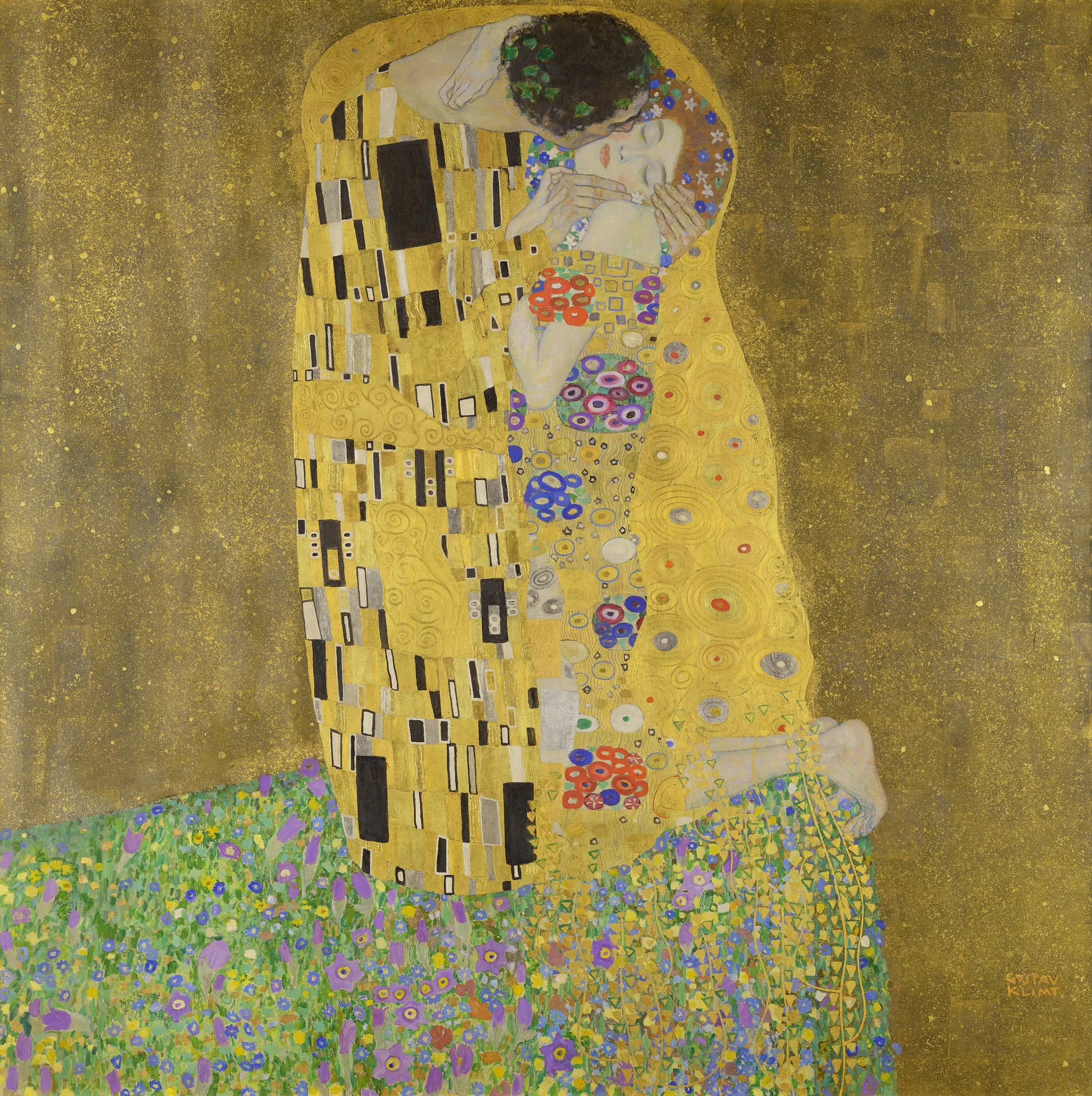
The Kiss is an oil‑on‑canvas work, but its surface is anything but ordinary. Klimt embellished the canvas with real gold, silver, and even platinum leaf, applying actual metallic foils directly onto the paint. This technique, a signature of his Golden Period, creates a luminous field that seems to glow from within, catching and reflecting light in a way that blurs the line between fine art and decorative craft. The tactile richness of the leaf adds a physical dimension to the image, turning the canvas into a radiant altar that celebrates both sensuality and material splendor.
The composition captures the lovers in a standing pose, their bodies pressed together to form a single, unified column. Their richly ornamented cloaks intertwine, binding them physically and symbolically into one solid structure. This vertical thrust, unusual for intimate scenes that often favor reclining or seated positions, emphasizes strength and permanence. By presenting love as a sturdy, columnar entity, Klimt invites viewers to contemplate the enduring, structural qualities of affection, suggesting that the bond between the figures is both protective and timeless.
Klimt’s decorative vocabulary splits the couple in striking contrast. The male figure’s robe is dominated by strong rectangular shapes, rendered in darker, harsher tones that convey order and protection. In opposition, the woman’s dress bursts with softer circular, biomorphic forms, painted in vibrant hues that evoke fluidity and organic vitality. These opposing motifs—angular versus curvilinear—create visual tension while simultaneously suggesting complementary aspects of the relationship: stability meeting grace, masculine solidity meeting feminine fluidity. The patterned garments become visual metaphors for the intertwined identities of the lovers, reinforcing the intimacy of the scene through ornamental dialogue.
Amid the overall serenity, a subtle, unsettling detail draws the eye: the woman’s toes are oddly bent, and her hand appears contorted. This deviation from natural posture introduces a proto‑Expressionist element, hinting at an undercurrent of tension beneath the radiant embrace. The slight distortion suggests vulnerability, reminding viewers that even in a luminous moment of love, there can be an undercurrent of unease. By embedding this nuanced gesture, Klimt enriches the narrative, offering a glimpse of the complex emotional layers that lie beneath the surface beauty.
One reading celebrates The Kiss as a life‑affirming ode to love, reflecting Klimt’s philosophical preoccupation with the endless cycle of life and death. The golden aura surrounding the couple can be seen as a visual echo of this obsession, a material that does not tarnish, symbolising timelessness. Influenced by the pessimistic ideas of Arthur Schopenhauer, particularly the concept of the ‘Will’ binding existence, Klimt may have infused the work with a sense of perpetual renewal. In this view, the embrace transcends the temporal world, hinting at an eternal recurrence where love persists beyond mortal limits.
Interpretations of The Kiss diverge widely. Some observers emphasize the tenderness of the moment, reading the embrace as a consensual, mutually surrendered kiss that radiates affection. Others perceive a power imbalance, noting the man’s dominant posture and the woman’s subtly submissive pose. This spectrum of readings showcases the painting’s capacity to hold multiple narratives, allowing each viewer to project personal understandings of intimacy and agency. Moreover, the work is hailed as one of the finest examples of Vienna Secession art, cementing its status as a pinnacle of the movement’s aesthetic achievements.
Through gold, geometry, and a whisper of tension, Klimt’s The Kiss continues to invite us into a timeless dialogue about love, art, and the very act of looking.