The story
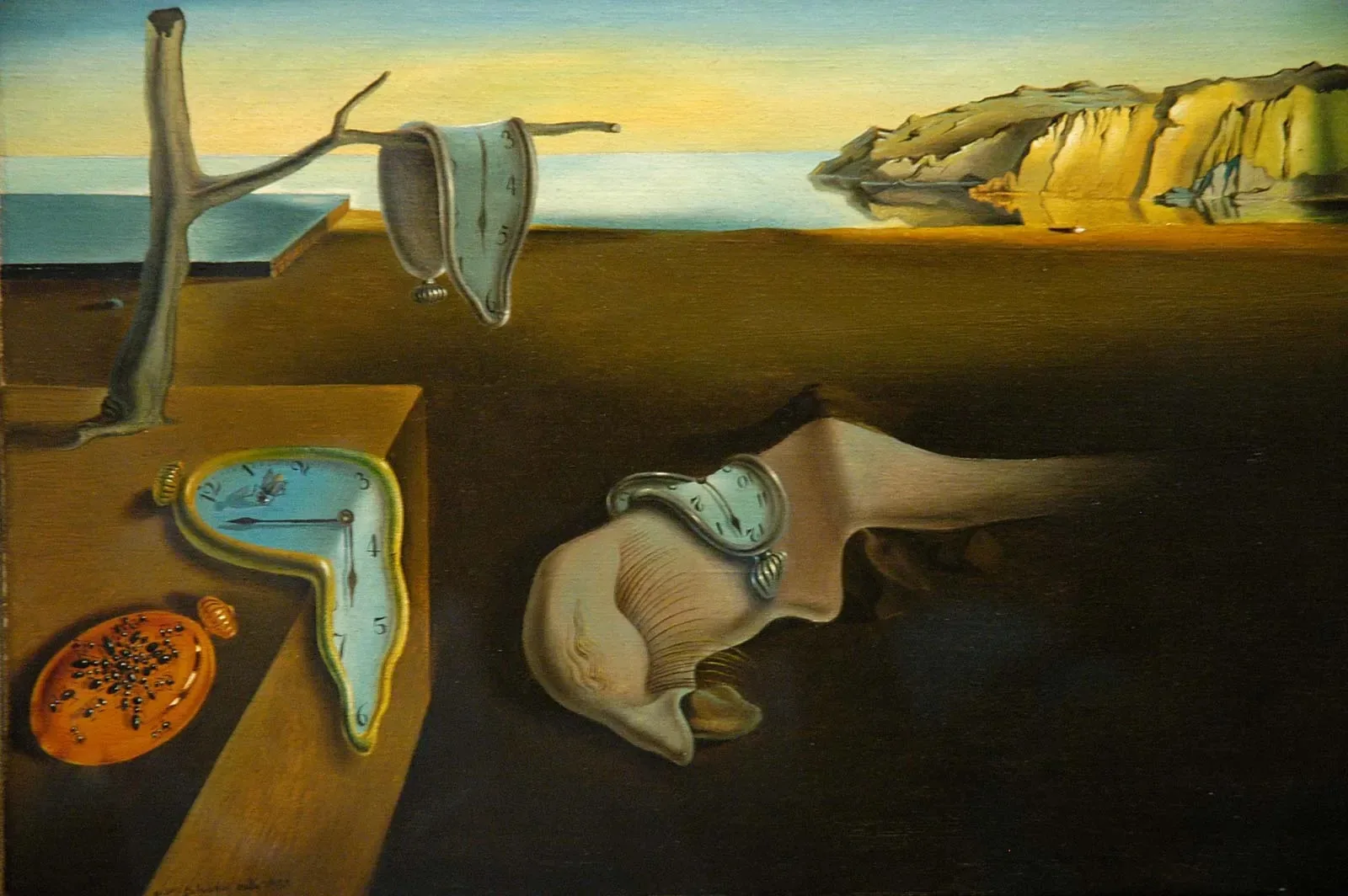
Imagine a landscape where time drips like honey, where a barren plain is punctuated by soft, melting watches and a lone, distorted figure watches from a desolate shore. This is the world Salvador Dalí conjured in The Persistence of Memory, an image that has haunted and fascinated audiences for decades. Its uncanny blend of meticulous realism and dream‑like distortion invites us to pause, to wonder how such a scene could exist on a modest canvas, and to explore the concrete facts that anchor this surreal vision in history.
The painting first stepped into the public eye across the Atlantic, debuting in New York in 1932. At that exhibition, a collector purchased the work for a modest $250, a price that seems astonishingly low today given its fame. Just two years later, in 1934, the same piece entered the permanent collection of the Museum of Modern Art, thanks to a generous donation. These early movements—from a transatlantic showing to a swift acquisition by a leading museum—situate the work within the rapid rise of Surrealism in the United States and underscore how quickly Dalí’s vision captured the imagination of an international audience.
At its core, The Persistence of Memory is an oil painting on canvas, a medium that allowed Dalí to render both the crisp detail of the landscape and the subtle, almost tactile softness of the watches. Oil’s slow drying time gave him the freedom to blend colors seamlessly, creating the luminous quality of the sky and the uncanny sheen on the melting clocks. This technical choice is essential: the medium’s versatility supports the juxtaposition of hyper‑realistic textures with the fluid, dream‑like forms that define the composition, anchoring the surreal narrative in a tangible, material reality.
Despite its monumental reputation, the canvas is modest in size, fitting comfortably within a small, cabinet‑sized frame. Curator Anne Umland notes that every inch of this compact surface is filled with meticulous detail, from the delicate veins on the leaves to the subtle gradations of light on the distant cliffs. This intimacy invites viewers to step close, to examine each element with the same precision that Dalí applied, reinforcing how the painting’s scale amplifies its impact: a tiny window onto a vast, uncanny world.
In the background, golden cliffs rise under a luminous sky, their warm hues unmistakably echoing the coastline of Catalonia, Dalí’s native region. These cliffs are not merely decorative; they root the surreal scene in a recognizable landscape, linking the dreamscape to Dalí’s personal geography. By embedding a familiar horizon within an otherwise impossible tableau, the artist creates a bridge between memory and imagination, reminding viewers that even the most fantastical visions are anchored in lived experience.
The soft, limp watches that dominate the foreground are described by Dalí himself as “the camembert of time.” This whimsical comparison highlights the watches’ pliable, almost edible quality, turning a symbol of precision into something malleable and absurd. By invoking a familiar cheese, Dalí invites us to reconsider the rigidity of temporal measurement, suggesting that time, like a soft cheese, can melt, spread, and lose its defined shape under the heat of perception.
Beyond their visual novelty, the melting clocks serve as a direct mockery of chronometric rigidity. Their fluid state undermines the conventional, mechanical representation of time, suggesting that the strict, linear measurement imposed by clocks is an illusion. This interpretation, grounded in the painting’s visual language, encourages viewers to question the authority of temporal structures that govern daily life, positioning the work as a subtle critique of modernity’s obsession with punctuality.
Some art historians have speculated that Dalí’s composition responds to Albert Einstein’s theory of relativity, which was reshaping scientific understandings of time and space in the early 20th century. While the painting does not reference Einstein directly, the fluidity of the clocks and the distorted perspective echo the idea that time is not absolute but can stretch and bend. This scholarly speculation adds a layer of intellectual context, linking Dalí’s surreal imagery to contemporary scientific debates about the nature of reality.
In a striking admission, Dalí publicly stated that he did not know the meaning of his own work. This confession underscores the painting’s open‑ended nature, inviting endless interpretation rather than presenting a single, author‑imposed narrative. By acknowledging his own uncertainty, Dalí reinforces the idea that the artwork exists as a mirror for viewers’ thoughts, allowing each observer to project personal meanings onto the surreal tableau.
The Persistence of Memory endures not merely as a visual curiosity but as a meticulously crafted convergence of material technique, personal geography, and intellectual intrigue. From its oil‑on‑canvas foundation and cabinet‑size intimacy to the golden Catalan cliffs and the soft watches that defy chronology, every element is anchored in verifiable fact. Together, these strands invite us to linger, to question, and to appreciate how a single, small canvas can encapsulate a universe where time itself becomes fluid and open to endless reinterpretation.
Stay curious, and let the mysteries of art continue to reshape your perception of time.