The story
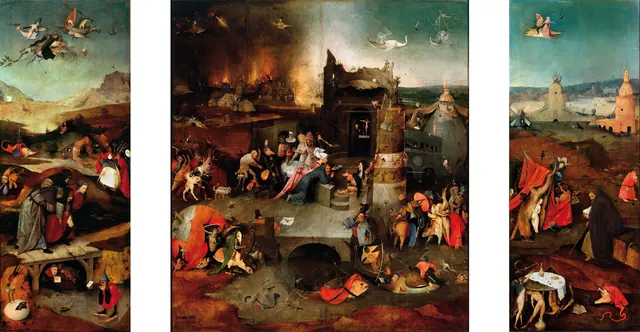
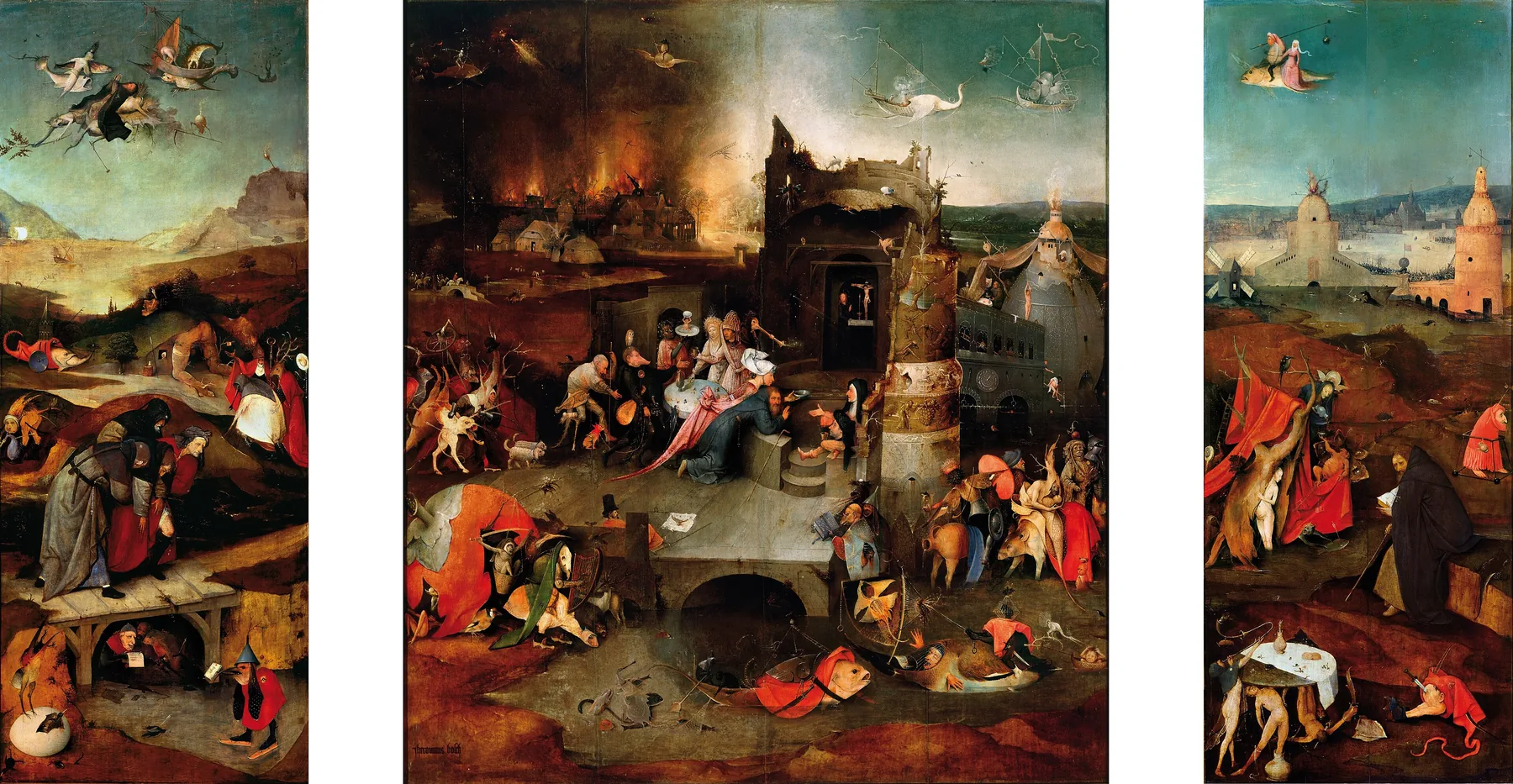
The composition of The Temptation of Saint Anthony moves with a surprising fluidity. Rather than being anchored by architectural lines, the space is organized by the myriad incidents and creatures that populate the scene. Each bizarre figure acts as a visual waypoint, drawing the eye from one corner to the next and creating a sense of motion across the panel. This regulated chaos invites the viewer to wander through the landscape, following the narrative thread that Bosch has woven with his fantastical cast. The result is a dynamic interior where every monster, every twisted tree, contributes to the overall rhythm of the work.
At the heart of the turmoil stands Saint Anthony, his hands lifted in prayer and the cross pressed to his chest, a clear sign of his devotion. Beside him, Bosch places a two‑legged, horned, pale goblin‑like creature. This figure, with its unsettling anatomy, contrasts sharply with the saint’s serene posture, highlighting the tension between holy contemplation and demonic temptation. The juxtaposition is deliberate: the saint’s heavenly gesture is set against a grotesque, almost playful monster, underscoring the inner struggle that defines the narrative. By positioning these two characters side by side, Bosch creates a visual dialogue that frames the entire scene.
Art historian Beaudoin reads the surrounding grotesques as more than decorative oddities. He suggests that the ugly, monstrous figures function as symbols of sin and mischievous behavior, deliberately crafted to provoke both fear and fascination in the viewer. Their exaggerated forms serve as visual warnings, embodying the temptations that assail Saint Anthony. This interpretation invites us to see the horror not merely as shock value but as a moral catalyst, urging the audience to confront the darker impulses that lurk at the edge of human consciousness. The painting thus becomes a staged arena where sin is made visible and palpable.
Bosch’s artistic priority in this work is unmistakable: the invention of monstrous, creative imagery. Rather than adhering to conventional religious iconography, he lets his imagination run wild, populating the scene with creatures that defy natural law. This emphasis on the bizarre is not a mere stylistic flourish; it reflects a conscious decision to push the boundaries of visual storytelling. By foregrounding his talent for conjuring the uncanny, Bosch signals that the power of his art lies in its ability to astonish, to make the viewer pause and question the limits of both the canvas and the human mind.
Beneath the vivid tableau lies a sturdy wooden support. The panel is constructed from two oak boards, a common practice for paintings of this era. This structural foundation provides the stability needed for Bosch’s intricate detailing and ensures the work’s longevity across centuries. While the wood itself is unadorned, its presence is essential, allowing the artist’s complex composition to rest securely and to be viewed as intended. The choice of oak reflects the material culture of the Low Countries at the time, linking the painting to its regional artistic traditions.
In the lower right corner a blaze flickers, its tongues of fire licking the sand. Scholars understand this fire to refer to Saint Anthony’s fire, the medieval term for the painful skin disease that afflicted the saint and later became a broader metaphor for spiritual torment. By rendering the flames with such intensity, Bosch ties the physical affliction to the saint’s inner trial, allowing the fire to serve as a visual anchor for the painting’s overarching theme of purification through suffering. The element of fire thus deepens the narrative, linking bodily pain with spiritual struggle.
Bosch’s The Temptation of Saint Anthony displays his ascent to stylistic maturity. The confident handling of space, the sophisticated interplay of figures, and the daring imagination all signal a master who has moved beyond early experimentation into a fully realized artistic voice. This maturity is evident not only in the fluid composition but also in the painter’s willingness to fuse the sacred with the grotesque, creating a cohesive visual narrative that reflects a seasoned hand at work. The work stands as a testament to Bosch’s development, marking a pivotal moment in his creative evolution.
A close look at the surface reveals brushwork that is noticeably sharper and terser than in Bosch’s earlier pieces. The strokes carry a heightened sense of command, each line placed with deliberate confidence. This technical refinement contributes to the painting’s overall clarity, allowing the myriad details—whether monstrous or holy—to stand out crisply against one another. The decisive hand evident in these brushstrokes underscores the artist’s growing mastery, reinforcing the notion that this work belongs to a period of heightened artistic control and precision.
Through its fluid composition, daring monsters, and masterful technique, Bosch’s The Temptation of Saint Anthony invites us to linger in a world where the sacred and the strange coexist, reminding us that great art endures by challenging both the eye and the imagination.