The story
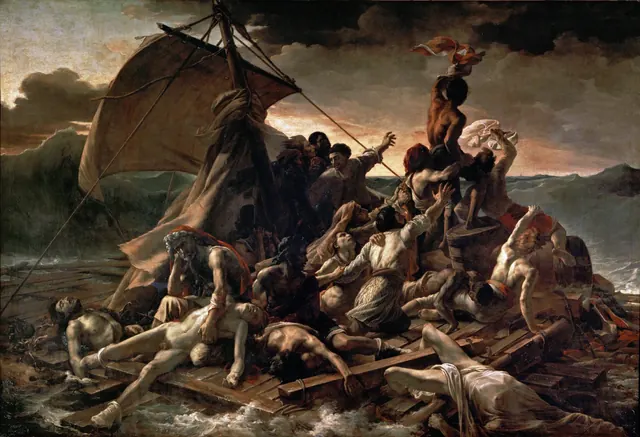
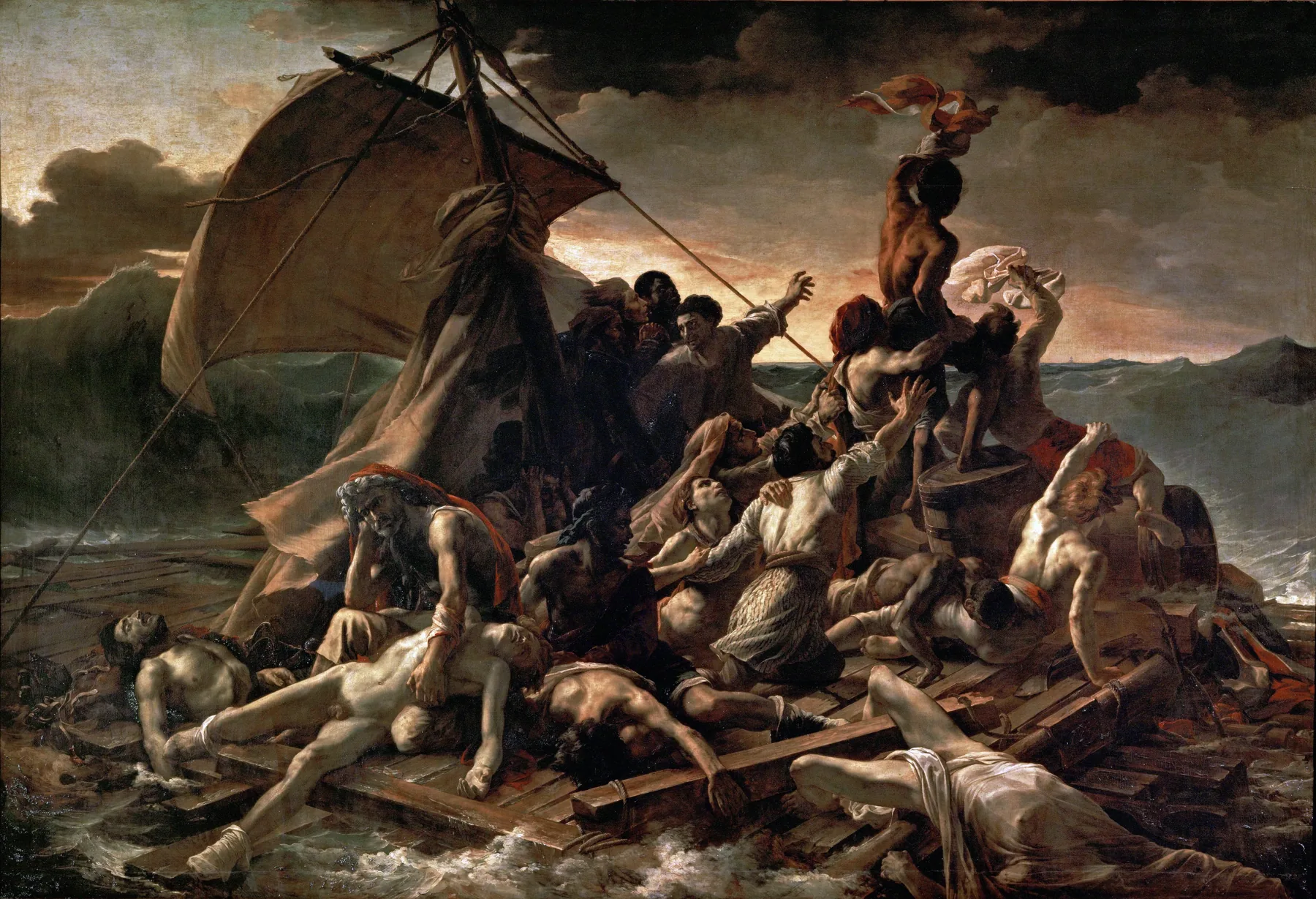
Standing in the Louvre’s Salle Mollien, viewers are confronted by a canvas that towers nearly five meters high and stretches over seven meters wide, a physical presence that dominates the surrounding wall. Titled “Le radeau de la Méduse”, the work bears the unmistakable imprint of French artist Théodore Géricault, executed in oil on canvas. Its sheer scale—4.91 m by 7.16 m, roughly 13.75 × 23.5 feet—creates an immersive field that draws the eye across the tumultuous scene. The painting belongs to the French State, is catalogued under inventory number INV 4884, and resides within the Musée du Louvre’s Département des Peintures, specifically in Salle Mollien, Denon, Salle 700.
Between 1818 and 1819 Géricault devoted himself to bringing this monumental vision to life, working in a modest rented atelier at 80 rue du Faubourg‑du‑Roule in Paris. The canvas itself arrived on 24 February 1818, supplied by the merchant‑restorer Étienne Rey, who provided a support measuring roughly fifteen by twenty‑two feet—exactly the 4.91 m by 7.16 m surface Géricault would fill—with a price of 440 francs. This generous format offered the artist ample room to develop his composition in oil, a medium that allowed him to render the dramatic intensity demanded by the subject. The combination of a purpose‑built support and the fluidity of oil paint underpinned the technical ambition of the work.
The completed masterpiece made its public debut at the Salon of 1819, where it was listed under the broader heading “Scène de naufrage”. The jury recognized its technical mastery, awarding the work a gold medal—a rare honor that highlighted Géricault’s skill. Yet the same exhibition sparked fierce critical hostility, with contemporary reviewers objecting to the grisly subject matter the painting presented. This dual response, commendation alongside moral outrage, underscored the painting’s capacity to provoke intense reaction within the French artistic establishment. The Salon entry, recorded as “Scène de naufrage”, thus marked both the painting’s official acceptance and the controversy it ignited.
Géricault himself declared that his purpose was to expose the tragedy of the Medusa disaster, a statement that aligns with his broader motivation to reveal the French Bourbon government’s attempt to conceal the scandal surrounding the event. Encyclopaedia Britannica interprets the work as a pointed political critique of the Bourbon Restoration, noting that the incompetent captain’s appointment was driven by political connections. This reading emphasizes that the painting foregrounds individual suffering rather than collective drama, focusing the viewer’s attention on the human cost of the catastrophe. Together, these perspectives frame the canvas not merely as a dramatic scene but as a deliberate visual inquiry into governmental negligence and its human consequences.
In 1820 Géricault took the massive canvas across the English Channel, presenting it to British audiences who received it as a sensational success. The work’s dramatic scale and vivid portrayal of human desperation resonated powerfully with viewers in England, drawing large crowds and enthusiastic commentary. This reception stood in stark contrast to the earlier French critical hostility, highlighting how the painting’s impact could shift dramatically across national contexts. The British response aligned with Géricault’s own stated purpose to expose the tragedy, reinforcing the work’s impact beyond French borders. The English acclaim helped to cement the painting’s reputation beyond France, establishing Géricault as an artist of international renown.
Following Géricault’s untimely death in 1824, the French State moved to secure the painting for the nation, recording its purchase on 12 November 1824 at a price of 6005 francs. The work entered the national collection under the inventory number INV 4884, also noted as catalogue entry C 51. Today it remains owned by the French State and is displayed in the Louvre’s Département des Peintures, specifically in Salle Mollien, Denon, Salle 700. This acquisition ensured that the monumental canvas would remain accessible to the public, preserving its historical and artistic significance within France’s premier museum. Its placement within the prominent Salle Mollien underscores the importance assigned to the work by French cultural authorities.
Even after two centuries, the canvas continues to command attention, its vast dimensions and oil‑on‑canvas surface inviting viewers to confront the human drama it depicts. Britannica notes that the painting emphasizes individual suffering rather than collective drama, a focus that remains striking when standing before the work. The enduring presence of “Le radeau de la Méduse” in the Louvre, catalogued as INV 4884, testifies to its lasting relevance as both a technical masterpiece and a visual record of a tragic episode. As audiences move along the wall, the painting’s scale and its focus on personal anguish remind us of the power of art to bear witness to history.
The raft endures, a monumental reminder that art can both record tragedy and challenge the powers that shape history.