The story
From Definition to Canvas
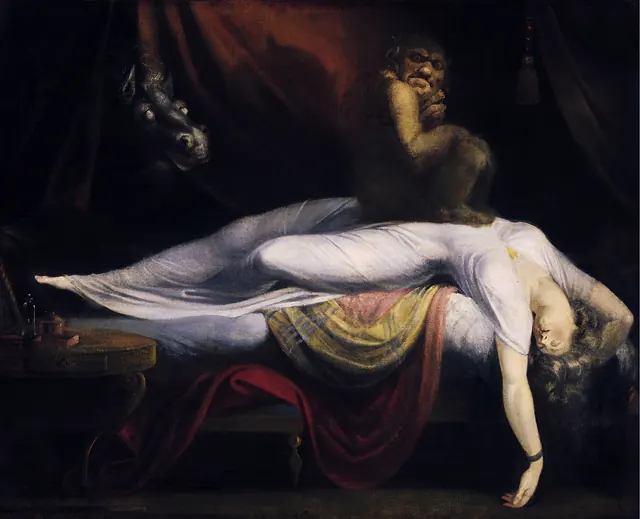
The 1721 Universal Etymological English Dictionary described a nightmare as a ‘disease when a man in his sleep supposes he has a great weight laying upon him.’ That unsettling definition finds a visual counterpart in Henry Fuseli’s oil painting titled *The Nightmare*. Executed in 1781, the work quickly became his most famous canvas. The artist, a Swiss‑born figure, chose oil paint to render a scene that still haunts viewers more than two centuries later. By turning a linguistic description of nocturnal oppression into a single, arresting image, Fuseli invites us to confront the very weight the old definition imagined.
The Sleeping Figure
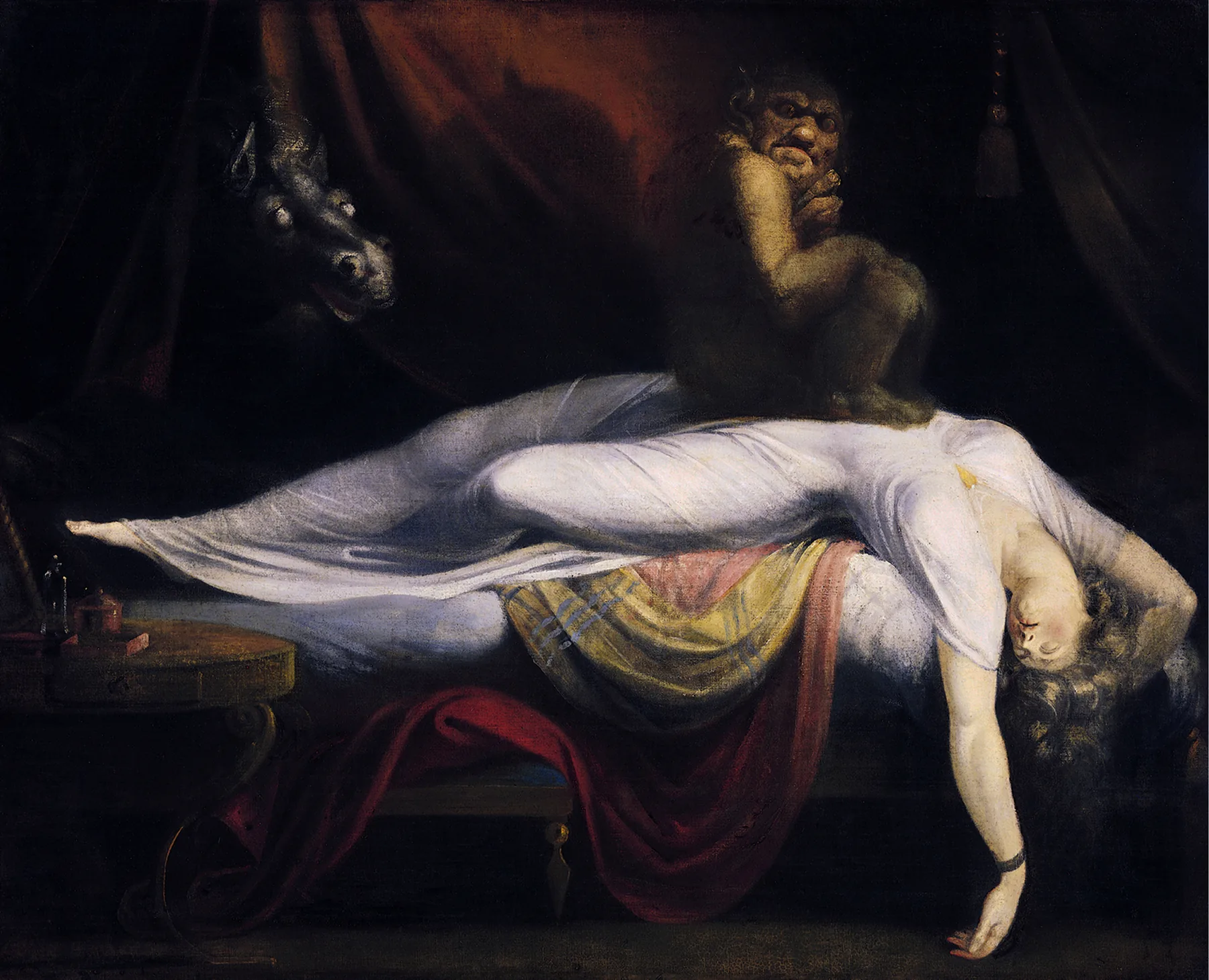
The foreground is dominated by a young woman reclining on a bed. She wears an airy white dress that spills across the sheets, its fabric catching the faint light and emphasizing its translucence. Her eyes are closed, suggesting a moment of sleep, while her arms, neck, and head hang over the edge of the mattress, creating a sense of vulnerability. The composition places her body in a diagonal line that leads the eye toward the darker corners of the room, yet she remains the luminous centre of the tableau. This careful arrangement of pose and garment establishes a quiet, almost intimate atmosphere that is abruptly disturbed by the figures that share her space.
The Incubus and the Light
Perched directly upon the woman’s chest is an anthropoid, apelike figure—identified by scholars as an incubus or mara. Its squat, muscular form presses against her torso, a visual embodiment of the oppressive weight described in the old definition. A single source of light streams in from the right, bathing only the woman and the creature in a stark, almost theatrical illumination while the surrounding space recedes into shadow. This focused lighting isolates the pair, heightening the tension between the vulnerable sleeper and the menacing presence. The contrast of bright flesh against deep darkness draws the viewer’s attention to the intimate confrontation, making the unseen terror palpable.
The Spectral Horse
In the dim background, almost as a whisper, a horse emerges from the gloom. Its eyes are pupil‑less, and its nostrils are flared, lending the animal an uncanny, spectral quality. Though positioned far from the central drama, the horse’s presence adds a further layer of unease, echoing the nocturnal themes that pervade the scene. Its shadowy form, rendered with muted tones, suggests a phantom that haunts the periphery of the dream, reinforcing the painting’s overall atmosphere of dread. By including this distant equine figure, Fuseli expands the composition beyond the immediate encounter, hinting at a broader, mythic landscape of nightmarish visions.
Color, Shadow, and the Red Drape
The right‑hand light not only highlights the woman and the incubus; it also catches a striking splash of red at the edge of the bed. A drapery falls there, its vivid hue described as a river of blood, slicing through the otherwise muted palette. This bold streak of colour punctuates the darkness, creating a visual rupture that intensifies the painting’s unsettling mood. The limited illumination, combined with the deep shadows that swallow the corners of the room, forces the viewer to confront the stark contrast between the pale innocence of the sleeping figure and the violent suggestion of the crimson fabric. The interplay of light, shadow, and colour thus becomes a central engine of the work’s emotional impact.
Power and Vulnerability
Interpretations of the scene often focus on the power dynamics suggested by the composition. The squat, animalistic male figure looming over the passive, exposed woman has been read as a visual metaphor for male dominance and the helplessness of women in eighteenth‑century society. The creature’s weight upon the chest evokes the literal ‘weight’ of oppression, while the woman’s vulnerable posture underscores a lack of agency. Such readings propose that Fuseli, whether consciously or not, encoded contemporary gender anxieties within the tableau, turning the nightmare into a commentary on societal structures. By presenting this stark juxtaposition, the painting invites viewers to contemplate the broader cultural forces that shape personal terror.
Depicting the Intangible
Beyond its narrative elements, *The Nightmare* is celebrated for portraying an intangible concept rather than a specific story or historical event. Scholars note that the work visualizes the abstract notion of a nightmarish weight pressing upon a sleeper, thereby breaking from the conventional literal storytelling of its time. This focus on a psychological state—an unseen, internal terror—marks the painting as an early example of representing the unseen through visual means. In doing so, Fuseli opened a pathway for artists to explore inner experiences and emotions on canvas, expanding the possibilities of what could be depicted in art.
First Exhibition and Enduring Icon
The canvas first entered the public eye at the Royal Academy of Arts in London in 1782, where it was displayed alongside the works of Fuseli’s contemporaries. Since that debut, the image has become an iconic visual shorthand, frequently parodied and referenced across popular culture. Its striking composition—a vulnerable sleeper confronted by a demonic presence—has been echoed in countless adaptations, cementing its place in the collective imagination. While the painting’s fame rests on its haunting imagery, its continued resonance demonstrates how a single, well‑crafted tableau can transcend its original context to become a lasting cultural symbol.
In its stark light and shadow, *The Nightmare* still whispers the ancient fear of an unseen weight, reminding us that some terrors are felt more than seen.